
- Mar 15, 2026
- 6 min read
Student Pilots Thrive in Complexity: Why Training at Shelbyville and Tupelo Prepares You for Real-World Aviation
The Quiet Airport Myth: Why Simple Is Not Always Better
Many people think learning to fly should happen at a quiet, remote airport. They imagine wide-open skies with no other planes, no radio chatter, and no distractions. It sounds peaceful. But here is the truth: that is not where real flying happens.
When you earn your wings and step into a professional cockpit, you will face controlled airspace, busy frequencies, and complex procedures. If you trained in a place where none of that existed, your first day at work becomes your first day of real training. That is a problem.
At Hawkins Flight Academy, we believe you should train in the environment you will actually fly in. Our locations at Shelbyville Municipal Airport (KSYI) in Tennessee and Tupelo Regional Airport (KTUP) in Mississippi give you something better than silence. They give you real-world preparation.
Controlled Airspace Without the Chaos
Big-city airports come with big-city problems. Long taxi lines. Ground delays. Twenty-minute waits just to get in the air. That congestion wastes your time and your money. But completely uncontrolled airports create a different problem: they do not prepare you for the real world.
Our Shelbyville and Tupelo locations sit in a strategic middle ground. You get exposure to controlled airspace and professional air traffic control (ATC) communications without the overwhelming traffic of major hubs. This means you build real skills in real time, but you are not stuck on a taxiway burning fuel.
Every time you contact ground control, every time you request clearance, every time you read back an instruction, you are building muscle memory. When you land your first job as a pilot, those procedures will already feel natural. You will not be learning on the job. You will be ready from day one.
Terrain and Weather Diversity: Your Training Laboratory
Flying over flat, featureless ground in perfect weather teaches you one thing: how to fly over flat, featureless ground in perfect weather. But aviation careers require more. You need to navigate hills, identify landmarks, adjust for wind patterns, and make decisions when conditions change.
Training across Tennessee and Mississippi exposes you to diverse terrain and seasonal weather patterns. You practice cross-country flights over rolling hills, river valleys, and urban areas. You learn how terrain affects wind. You see how weather systems move differently in different regions. This variety makes you a sharper, more adaptable pilot.
When you graduate from our programs, you do not just know how to fly one route in one condition. You know how to think like a pilot. That is the difference between checking boxes and building real competence.
Glass Cockpits in Real ATC Environments
Modern airlines do not use round dials. They use glass cockpit displays. If you train on outdated equipment, you will have to relearn everything when you step into a professional aircraft. That costs time and money.
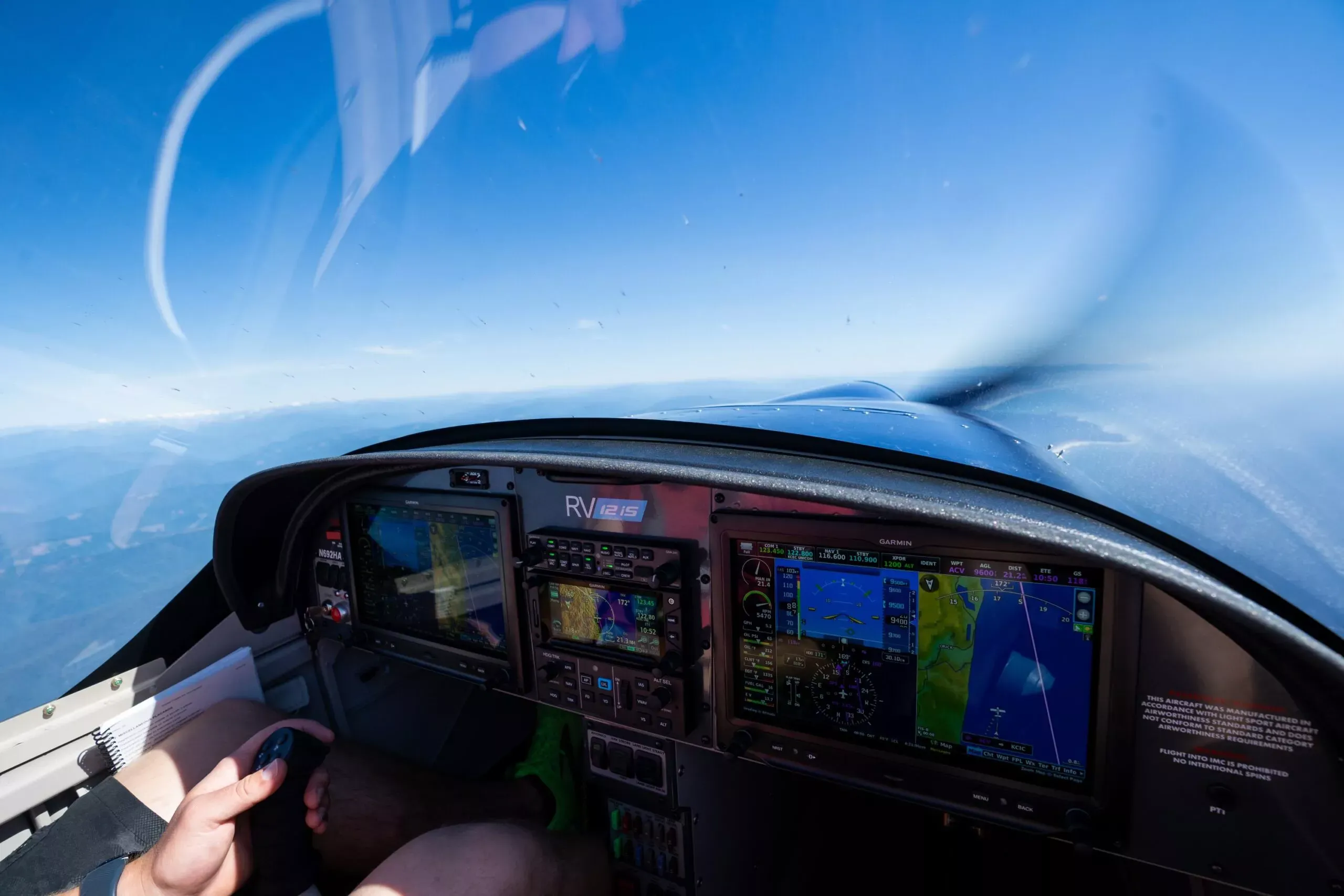
Our fleet features Garmin G3X Touch glass cockpits and digital autopilots like the GFC 500. You also train with GPS systems including the Garmin GNS-530 WAAS and Aspen EFD 1000 MAX PFD. These are not luxury upgrades. They are the tools you will use in your career.
But technology alone is not enough. You also need to use that technology in real situations. At KSYI and KTUP, you practice modern avionics while talking to real controllers, navigating real airspace, and making real decisions. This combination of cutting-edge equipment and real-world complexity is what builds professional-level skills.
Program-Based Pricing Eliminates the Complexity Penalty
At most flight schools, training in busy airspace costs more. You pay by the hour. If you sit on the ground waiting for clearance, the meter is running. If you spend extra time in the pattern because of traffic, you pay for it. This creates a financial penalty for learning in realistic conditions.
We eliminated that penalty. Our program-based pricing means you know your total cost before you start. Whether you train at a quiet airport or a controlled field, your price stays the same. You can focus on learning instead of watching the clock.
For students in our Professional Pilot Program, this structure is especially valuable. Package 1 (PPL to Multi-Engine) costs $74,995. Package 2 (PPL to CFI/CFII/MEI) costs $89,995. Those prices cover your training in a real-world environment with modern equipment. No surprises. No hourly creep. Just clear costs and clear results. If you need help managing the investment, flexible financing options are available through our partnerships with Stratus Financial and AOPA Finance.
Graduated Complexity: You Build Skills Step by Step
We do not throw new students into the deep end. Your training follows a carefully designed progression. You start with basic maneuvers in less busy times of day. As your skills grow, so does the complexity of your environment. By the time you are ready for your Private Pilot License, controlled airspace feels comfortable, not intimidating.
This graduated approach extends through every rating. When you move into Instrument Rating training, you already know how to communicate with ATC. You already understand airspace structure. Now you add the complexity of flying by instruments. Each layer builds on the last.
By the time you reach your Commercial Pilot License, you have logged hundreds of hours in real-world conditions. You have flown cross-country routes, handled unexpected weather, communicated with multiple controllers, and made command decisions. That depth of experience is what separates competent pilots from exceptional ones.
Your Instructors Are Mentors, Not Just Time-Builders
At many schools, instructors are just pilots building hours to move on. They teach because they have to, not because they care. That creates a culture of shortcuts and low expectations.
Our instructors see teaching differently. They are mentors who invest in your success. They understand that training in controlled airspace requires patience, repetition, and attention to detail. They do not rush you. They do not cut corners. They build your confidence one flight at a time.
This mentorship matters most when conditions get complex. When you are juggling radio calls, navigation, and traffic avoidance, you need an instructor who stays calm and helps you think through problems. Our team provides that guidance every single flight.
Why Controlled Airport Training Builds Better Pilots
Training at controlled airports like KSYI and KTUP offers clear advantages over remote, uncontrolled fields. You get daily practice with real controllers instead of little to no ATC exposure. You fly in Class D airspace with diverse traffic rather than mostly uncontrolled airspace. This creates direct preparation for professional flying instead of requiring retraining later.
You also experience terrain variety with hills, valleys, and urban areas instead of flat and featureless ground. Our fixed program pricing means you avoid the hourly billing that adds up in traffic. You train with modern glass cockpits instead of older steam gauges.
The difference is clear. You either train in an environment that mirrors your career, or you train in a simplified version that leaves gaps in your skills.
Frequently Asked Questions
Is controlled airspace training harder for beginners? Not when you learn it the right way. At Hawkins Flight Academy, we use a graduated approach. You start simple and add complexity as your skills grow. By the time you fly solo, controlled airspace feels natural.
Will training at KSYI or KTUP cost more than a quiet airport? No. Our program-based pricing eliminates the hourly penalty. You pay a fixed cost whether you train in controlled or uncontrolled airspace. That means you get better preparation without paying more.
What if I want to fly recreationally, not professionally? Even recreational pilots benefit from controlled airspace experience. Many popular destinations have Class D or Class C airspace. If you trained somewhere quiet, you might avoid those airports out of fear. We give you the confidence to fly anywhere.
Do you have enough aircraft for all your students? Yes. We operate 7 training aircraft across our fleet, including multiple Vans RV-12iS models with glass cockpits. There are no waitlists here, so you can fly consistently and finish your certification faster.
How long does it take to complete training at Hawkins? That depends on your program. Our Professional Pilot Program can take you from zero experience to Commercial Pilot and CFI in under 10 months. Private pilot training typically requires a minimum of 40 hours but most students complete it in a few months with consistent scheduling.
Can I use simulators to reduce costs? Yes. We have Redbird simulators including the Redbird MCX full-motion AATD. You can log up to 2.5 hours toward your Private Pilot License and 10 hours toward your Instrument Rating. Simulator time costs less than aircraft time, which helps manage your budget.
What makes Hawkins instructors different? Our instructors are mentors, not just time-builders. They invest in your success and treat teaching as a profession, not a stepping stone. According to the FAA, quality instruction is the most important factor in pilot safety and competence.
Start Training in the Real World
You do not become a professional pilot by avoiding complexity. You become one by mastering it. At Hawkins Flight Academy in Shelbyville, Tennessee, and Tupelo, Mississippi, you train in the same environment you will work in. You use the same technology. You follow the same procedures. When you graduate, you are not just certified. You are ready.
The path to a professional aviation career starts with real-world preparation. If you want to see the difference for yourself, schedule a Discovery Flight or contact us today. You will meet our team, see our modern fleet, and experience controlled airspace training firsthand. Let's get you ready for the real world.
Ready for Takeoff?
Book a Discovery Flight Today
Experience the thrill of flight firsthand with a Discovery Flight at Hawkins Flight Academy. Whether you're considering a career in aviation or just want to see what it’s like to be in the pilot’s seat, this is the perfect first step. You'll fly with a certified instructor and take the controls yourself—no prior experience needed.