
- Apr 1, 2026
- 7 min read
Why April is the Perfect Time to Start Flight Training in Tennessee
Why April Changes Everything for Flight Training
Walk outside on an April morning in Tennessee, and you will feel the difference. The harsh cold of winter has passed. The oppressive heat of summer has not yet arrived. The air is clear. The winds are steady but not severe. The days are getting longer. This is the season when flight training becomes not just possible but ideal.
At Hawkins Flight Academy in Shelbyville, Tennessee, and Tupelo, Mississippi, we see the same pattern every spring. New students arrive with one question: Is this really the best time to start? The answer is yes. And here is exactly why.
Spring weather in the Southeast creates what pilots call VFR conditions more consistently than any other season. Visual Flight Rules mean you can see clearly, navigate confidently, and build skills without the complications of extreme weather. For someone taking their first flight lesson, this matters more than you might think.
Stable Weather Means Consistent Training Progress
Winter brings ice, fog, and unpredictable conditions. Summer delivers thunderstorms and oppressive heat that affects aircraft performance. Fall can be beautiful, but it is short and leads straight back to winter. Spring gives you the longest stretch of flyable days in a row.
Why does consistency matter? Because flight training builds on repetition. You learn a maneuver. You practice it the next day. Then again the day after. Each session reinforces the last. Your muscle memory develops. Your confidence grows. But if weather cancels half your lessons, that rhythm breaks. You spend weeks relearning what you should have mastered.
At our Shelbyville and Tupelo locations, April through June delivers the most reliable training windows. You can schedule flights and actually fly them. This keeps your Private Pilot License timeline on track instead of stretching it across months of cancellations and restarts.
Extended Daylight Hours Give You More Training Options
In December, the sun sets before 5 PM. If you work a standard job, you have almost no time to fly after work. Your only option is weekends. This limits how often you can train and how quickly you can progress.
By April, the sun does not set until after 7 PM. By May, you have until nearly 8 PM. This creates a massive advantage. You can finish work, drive to the airport, complete a full lesson, and still land before dark. Suddenly you can fly three or four times a week instead of just twice. That difference cuts your total training time significantly.
Our students who start in spring and train consistently often complete their Private Pilot License before summer ends. Students who start in fall or winter can take twice as long simply because of scheduling constraints. The calendar works in your favor when you start in April.
Comfortable Temperatures Make Learning Easier
Small training aircraft do not have powerful air conditioning. In July and August, cockpit temperatures in Tennessee can reach 100 degrees or higher before you even take off. That heat drains your focus. It makes long lessons exhausting. It turns what should be an exciting experience into an endurance test.
Winter creates the opposite problem. Cold fingers make it harder to manage controls smoothly. Bulky jackets restrict your movement. Preflight inspections in freezing temperatures are miserable. You spend mental energy just staying comfortable instead of focusing on learning.
Spring eliminates both extremes. Temperatures in the 60s and 70s keep you comfortable from preflight through landing. You can focus completely on flight training instead of fighting the weather. This might sound like a minor detail, but comfort directly affects how much you learn and retain each flight.
The Graduation Timeline That Actually Works
Here is what a typical spring start looks like. You begin in April. You fly two to three times per week through May and June. By July, you are ready for your solo flight. By August or September, you are taking your checkride. You finish your Private Pilot License before fall weather becomes a factor.
Now compare that to a November start. Weather cancellations slow your progress. Shorter days limit your availability. You might not solo until March or April of the following year. Your checkride could be pushed to summer. What should take a few months stretches to nearly a year.
The difference is not your ability or dedication. It is simply the calendar. Starting in April aligns your training with nature instead of fighting it. For students in our Professional Pilot Program, this timing matters even more. The entire program can take less than 10 months. Starting in spring means you can potentially finish the full sequence before the next winter arrives.
Modern Aircraft Perform Better in Spring Conditions
Aircraft engines are sensitive to temperature and air density. Hot summer air is less dense, which reduces engine performance and climb rates. Cold winter air is denser, which helps performance but comes with the risk of carburetor ice and other complications.
Spring air density sits in the ideal range. Our fleet of Vans RV-12iS aircraft with Rotax 912iS engines performs exactly as designed. The 100 horsepower delivers predictable climb. The fuel-efficient design works optimally. You learn how the aircraft should handle in normal conditions, not how to compensate for weather extremes.
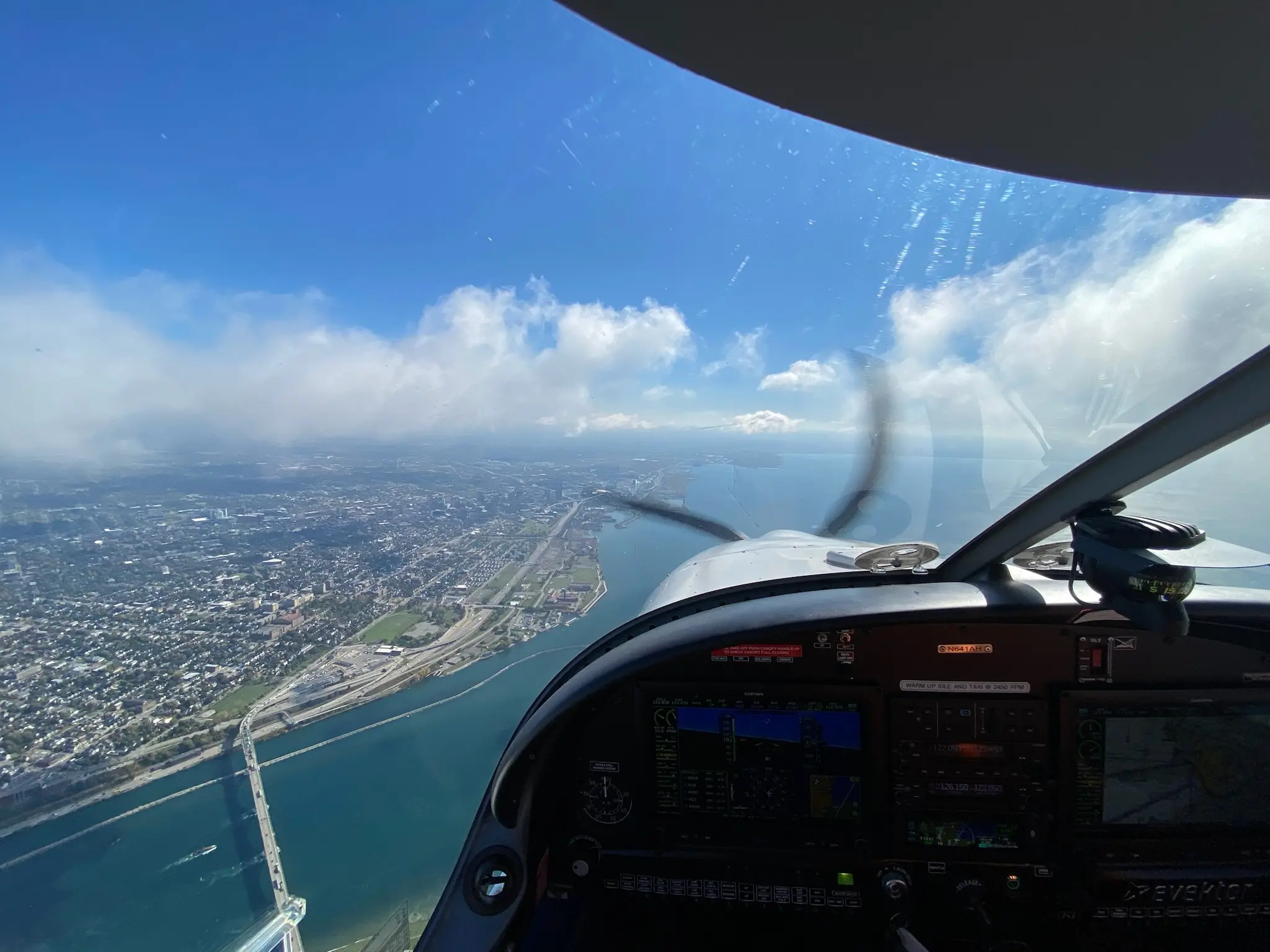
Our planes also feature Garmin G3X Touch glass cockpits and GFC 500 digital autopilots. These modern systems teach you the technology you will use in your career. When you train in comfortable spring conditions, you can focus on learning these systems properly instead of just trying to survive the environment.
Spring Visibility Builds Navigation Confidence
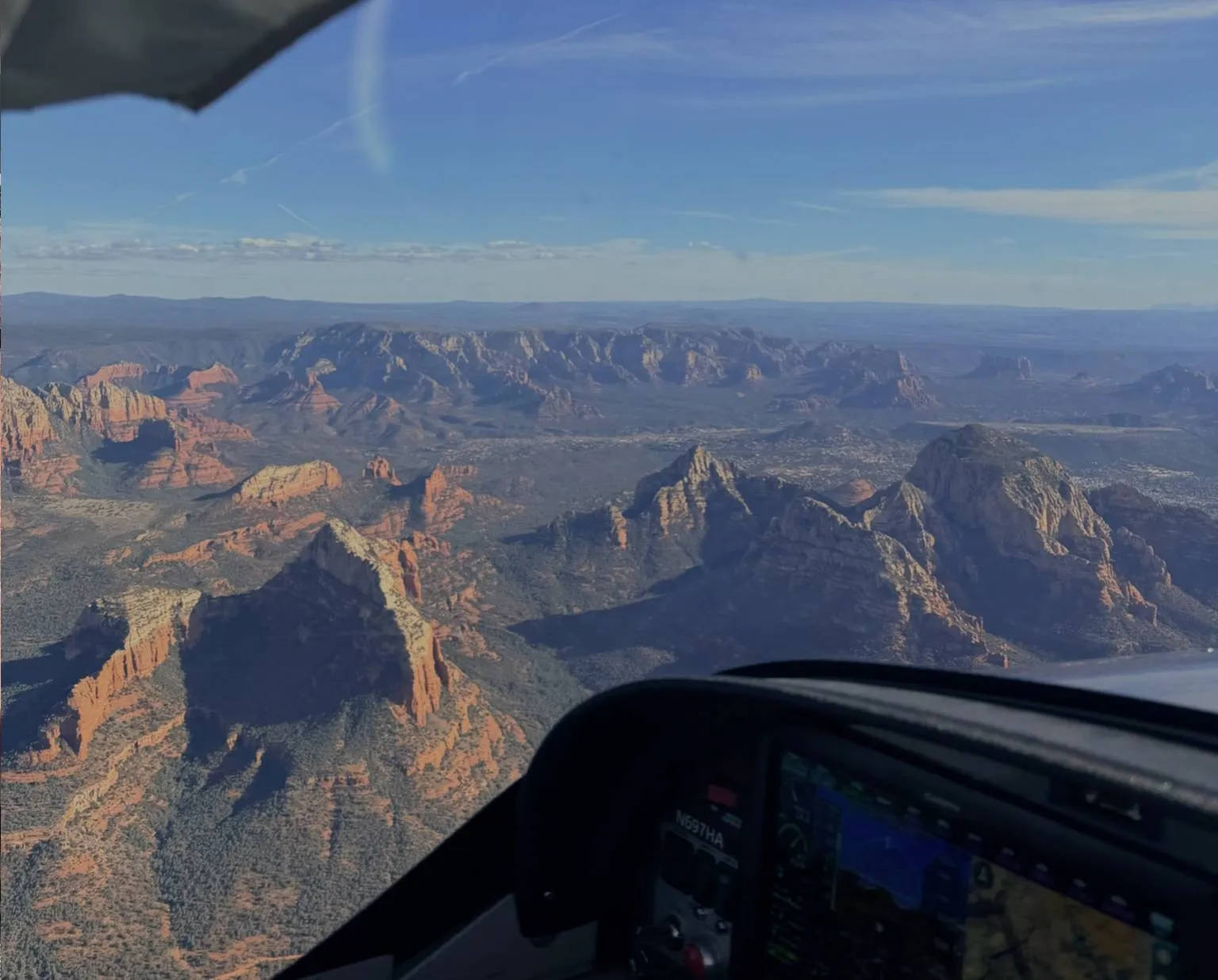
Spring air in the Southeast is remarkably clear. You can see for miles. Landmarks stand out. Horizons are crisp. This visibility is critical when you are learning to navigate by visual reference.
During your first cross-country flights, you need to identify towns, rivers, roads, and airports from the air. Spring visibility makes this easier. You build confidence in your ability to navigate. You learn to read the terrain. You develop the situational awareness that every pilot needs.
Summer haze reduces visibility significantly. Winter clouds and fog create similar problems. But in April and May, you get clear skies day after day. This is when you lock in the fundamental navigation skills that will serve you for your entire flying career.
Your Financing Options Are Ready When You Are
Spring is decision season. Tax refunds arrive. Annual bonuses get paid. You have the financial clarity to commit to a major goal. This timing aligns perfectly with starting flight training.
At Hawkins Flight Academy, we use program-based pricing instead of unpredictable hourly rates. You know your total cost before you start. For our Professional Pilot Program, Package 1 (PPL to Multi-Engine) costs $74,995. Package 2 (PPL to CFI/CFII/MEI) costs $89,995. These are fixed prices. No surprises.
If you need help managing that investment, we partner with Stratus Financial and AOPA Finance to offer flexible financing options. Spring is when many students finalize their financing and begin training. The combination of good weather and financial preparation creates the perfect starting point.
Ground School Timing Supports Your Success
Flight training is not just time in the cockpit. You also need ground school to learn regulations, weather theory, aircraft systems, and navigation. At Hawkins Flight Academy, we offer a 14-week in-person ground school at our Shelbyville location. Classes run about 2 hours each and cost $499.99.
When you start flight training in April, you can run ground school in parallel with your flight lessons. This creates a powerful learning loop. You study a concept in class. Then you practice it in the air. The two reinforce each other.
Our ground school comes with an Exam Pass Guarantee. We are confident in our curriculum and our instructors. This is not pre-recorded video you watch alone. This is real instruction from experienced pilots who answer your questions and explain concepts until you understand them.
No Waitlists Mean You Can Start Immediately
At many flight schools, peak season means waitlists. You want to fly, but you cannot get an aircraft. You cannot get an instructor. You sit idle while your motivation fades.
We eliminated that problem. We operate 7 training aircraft and maintain a team of dedicated instructors. There are no waitlists here. When you are ready to start, we are ready to teach you. This matters especially in spring when conditions are ideal. You do not waste perfect flying weather waiting for availability.
How Tennessee's Geography Enhances Spring Training
Tennessee and Mississippi offer unique advantages for spring flight training. The terrain provides variety without overwhelming complexity. You practice over rolling hills, river valleys, and agricultural land. You learn to identify visual landmarks. You see how terrain affects wind patterns and local weather.
Our location at Shelbyville Municipal Airport (KSYI) gives you exposure to controlled airspace without the congestion of major hubs. You communicate with real air traffic controllers. You practice proper radio procedures. You learn to operate in the environment you will actually fly in after graduation. According to the FAA, training in controlled airspace better prepares pilots for real-world flying conditions.
Spring visibility in this region is exceptional. You can see the Smoky Mountains to the east on clear days. You track interstate highways and rivers for navigation practice. This combination of excellent visibility and diverse terrain creates an ideal learning environment.
Your Instructors Make the Seasonal Difference
Weather and daylight matter, but your instructor matters more. At Hawkins Flight Academy, our instructors are mentors, not just time-builders rushing to airline jobs. They understand how to maximize spring training conditions.
They know when to fly and when to wait. They recognize which days are perfect for practicing landings and which days are better for cross-country navigation. They adjust your training plan based on seasonal conditions to keep you progressing efficiently.
This mentorship approach means you are not just logging hours. You are building real competence under the guidance of professionals who care about your success. That makes the difference between finishing strong and giving up halfway through.
Frequently Asked Questions
How quickly can I complete my Private Pilot License if I start in April?
If you fly two to three times per week consistently, most students complete their Private Pilot License in 4 to 6 months. The Private Pilot License requires a minimum of 40 hours of flight time. Spring weather and extended daylight hours let you maintain that consistent schedule without weather cancellations derailing your progress.
What if my work schedule is unpredictable?
Extended spring daylight gives you flexibility. With sunset after 7 PM in April and closer to 8 PM by May, you can fly after work on weekdays. This opens up more scheduling options than winter when you are limited to weekends. Our 7 training aircraft and dedicated instructor team mean we can usually accommodate varied schedules.
Is spring more expensive than other seasons?
No. We use program-based pricing, not hourly rates. Your cost stays the same regardless of season. You actually save money by starting in spring because consistent weather means fewer cancelled lessons and faster completion. Every cancelled lesson extends your timeline and costs you more in the long run.
Do I need any experience before starting flight training?
Absolutely not. Our Discovery Flight is designed for people with zero aviation experience. It lasts 1 to 1.5 hours total and includes 30 to 45 minutes of actual flight time. You get a preflight briefing, time at the controls, and a post-flight discussion. This is your chance to see if flying is right for you with no long-term commitment.
What medical requirements do I need to start training?
For a Private Pilot License, you need a 3rd class medical certificate from an FAA Aviation Medical Examiner. The exam is straightforward for most people. If you have concerns about the medical, you can start with our Sport Pilot Certificate program instead. Sport Pilot only requires a valid driver's license instead of a medical certificate, making it more accessible while still giving you the freedom to fly.
Can I use simulators to reduce my training time?
Yes. We have Redbird simulators including the Redbird MCX full-motion AATD and the Redbird TD2 FAA-approved BATD. You can log up to 2.5 hours toward your Private Pilot License using simulator time. Simulators cost less per hour than aircraft, so this helps manage your budget. They are also perfect for spring days when afternoon storms pop up - you can still train even when flying is not possible.
What happens after I get my Private Pilot License?
Your options expand significantly. Many students continue to our Instrument Rating program, which requires 40 hours of instrument time and lets you fly in clouds and reduced visibility. Others pursue Commercial Pilot training, which requires 250 total flight hours and opens the door to paid flying jobs. If you want the fastest path to an airline career, our Professional Pilot Program takes you from zero experience through Commercial Pilot and flight instructor ratings in less than 10 months.
Start Your Aviation Journey This Spring
The perfect time to start flight training arrives every April. The weather stabilizes. The days grow longer. The air clears. Aircraft perform optimally. Everything aligns to support your success.
At Hawkins Flight Academy, we have built our entire operation around one goal: turning aspiring pilots into confident, competent aviators. Our modern fleet of Vans RV-12iS aircraft with glass cockpits teaches you on the same technology you will use in your career. Our program-based pricing eliminates cost surprises. Our experienced instructors provide real mentorship, not just instruction.
The question is not whether you can become a pilot. The question is when you will start. April gives you every advantage. Clear skies, comfortable temperatures, extended daylight, and an academy ready to support your goals.
Take the first step with a Discovery Flight. See our fleet. Meet our instructors. Experience what spring flying in Tennessee feels like, or contact us directly to discuss your training timeline and goals. Your aviation career is waiting. Spring is here. Let
Ready for Takeoff?
Book a Discovery Flight Today
Experience the thrill of flight firsthand with a Discovery Flight at Hawkins Flight Academy. Whether you're considering a career in aviation or just want to see what it’s like to be in the pilot’s seat, this is the perfect first step. You'll fly with a certified instructor and take the controls yourself—no prior experience needed.