Flight Simulator Instrument Training: Redbird Simulators in 2026

Published by:
Matt Wilkins
Published on:
Updated on:
Read time:
8 min read
When you sit in the cockpit of a training aircraft with your headset on and hands on the controls, every minute of flight time counts. But as any student pilot quickly learns, progress in the air can be easily interrupted by bad weather or high aircraft rental costs. Earning your private certificate or instrument rating requires consistency, and that is where ground-based flight simulator instrument training becomes a crucial part of your preparation.
By integrating advanced flight simulation into your regular training routine, you can maximize your productivity, build precise habits, and save thousands of dollars in the process. Understanding the federal regulations governing simulator hours and how our dedicated simulator lab operates ensures you get the absolute most value out of every training session.
Earning FAA Credits: How Simulator Hours Count Toward Your Rating
The FAA recognizes the profound value of ground-based training devices and allows pilots to count simulator time toward their required certificates and ratings. However, these hours cannot be logged in just any home setup; they must be completed in an approved Aviation Training Device (ATD) under the direct supervision of an authorized flight instructor.
Under FAA Part 61 regulations, the specific credits you can log vary based on the classification of the device:
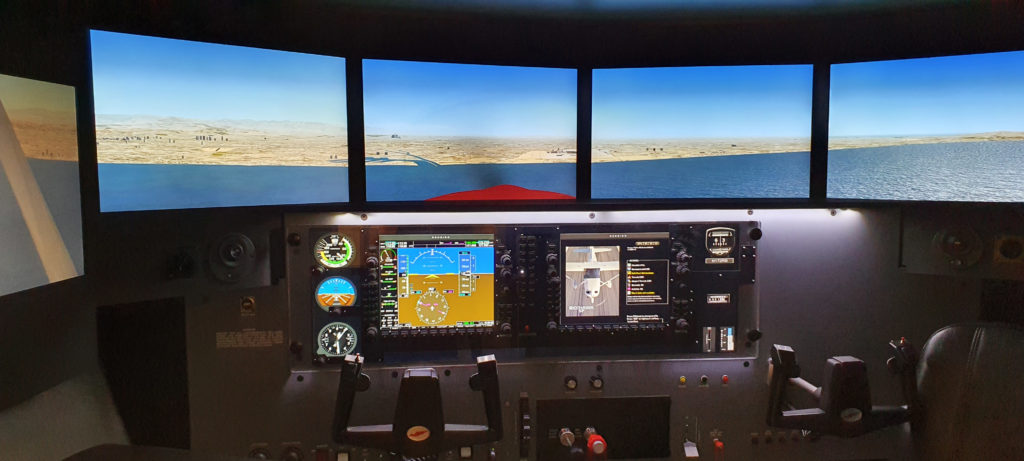
- Basic Aviation Training Devices (BATDs): Devices like our Redbird TD2 provide a stationary platform to practice instrument scans, basic navigation, and radio work. Under 14 CFR 61.65, you can credit up to 10 hours of instrument training in an approved BATD toward the 40-hour instrument time requirement for an instrument rating.
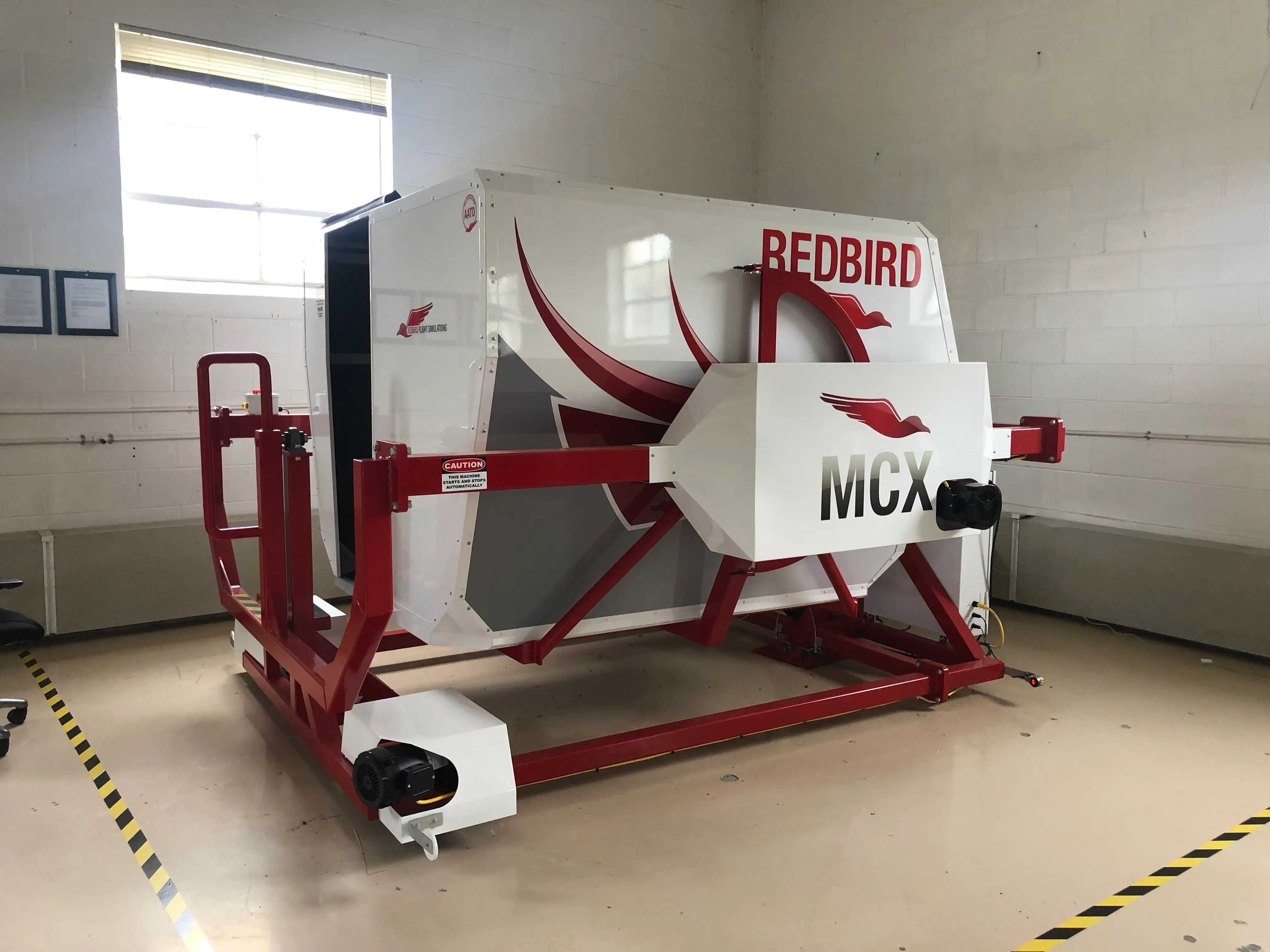
- Advanced Aviation Training Devices (AATDs): Devices like our Redbird MCX feature a full-motion platform, wider visual displays, and more complex cockpit controls. The FAA allows you to credit up to 20 hours of training in an approved AATD toward your instrument rating.
- Private Pilot Certificate Credits: If you are a beginner working toward your initial certificate, 14 CFR 61.109 allows you to log up to 2.5 hours of approved simulator time toward your private pilot aeronautical experience requirements.
The table below summarizes these loggable training limits to help you plan your program schedule:
| Certificate or Rating Pathway | FAA Training Device Category | Maximum Loggable Simulator Hours |
|---|---|---|
| Private Pilot Certificate | Basic (BATD) or Advanced (AATD) | 2.5 Hours |
| Instrument Rating | Basic Aviation Training Device (BATD) | 10 Hours |
| Instrument Rating | Advanced Aviation Training Device (AATD) | 20 Hours |
Applying these credits directly reduces the number of hours you must spend in a rented training airplane, which immediately lowers your total program cost.
The Practical Advantage: Why Pause-and-Replay Beats In-Flight Stress
Earning an instrument rating is one of the most mentally demanding phases of flight training. You must learn to fly the aircraft solely by reference to instruments, manage complex navigation systems, and communicate with air traffic controllers simultaneously. In a real aircraft, this high cognitive load can quickly lead to pilot sensory overload.
In our dedicated simulation environment, we utilize a pause-and-replay training strategy to eliminate this learning friction:
- The Pause Button: If you make a mistake on an instrument approach, your instructor can pause the simulation mid-flight. You can analyze your instrument scan, discuss the correction, and resume the flight without wasting aircraft rental time.
- Instant Repositioning: Rehearsing a holding pattern or approach in an airplane requires flying a complete circuit, which can take 15 to 20 minutes of flight time. In the simulator, your instructor can instantly reposition your aircraft back to the final approach fix, letting you practice three approaches in the time it would take to fly one in the air.
- Safe Emergency Training: Simulating complex emergencies, such as a vacuum pump failure in actual instrument meteorological conditions, carries high risk in a real airplane. In our simulator lab, you can practice these scenarios safely on the ground, building the automatic muscle memory needed to handle real-world emergencies.
This structured training method is a core component of the Hawkins Method, ensuring that you transition into the aircraft with absolute confidence and highly polished procedures.
Standardized Technology: Aligning Our Simulators with the Hawkins Fleet
One of the common issues students face at traditional flight schools is technology misalignment. If you study on old analog gauges but fly in a modern glass-cockpit aircraft, your cockpit habits do not transfer smoothly, causing you to spend extra hours adjusting to the panel.
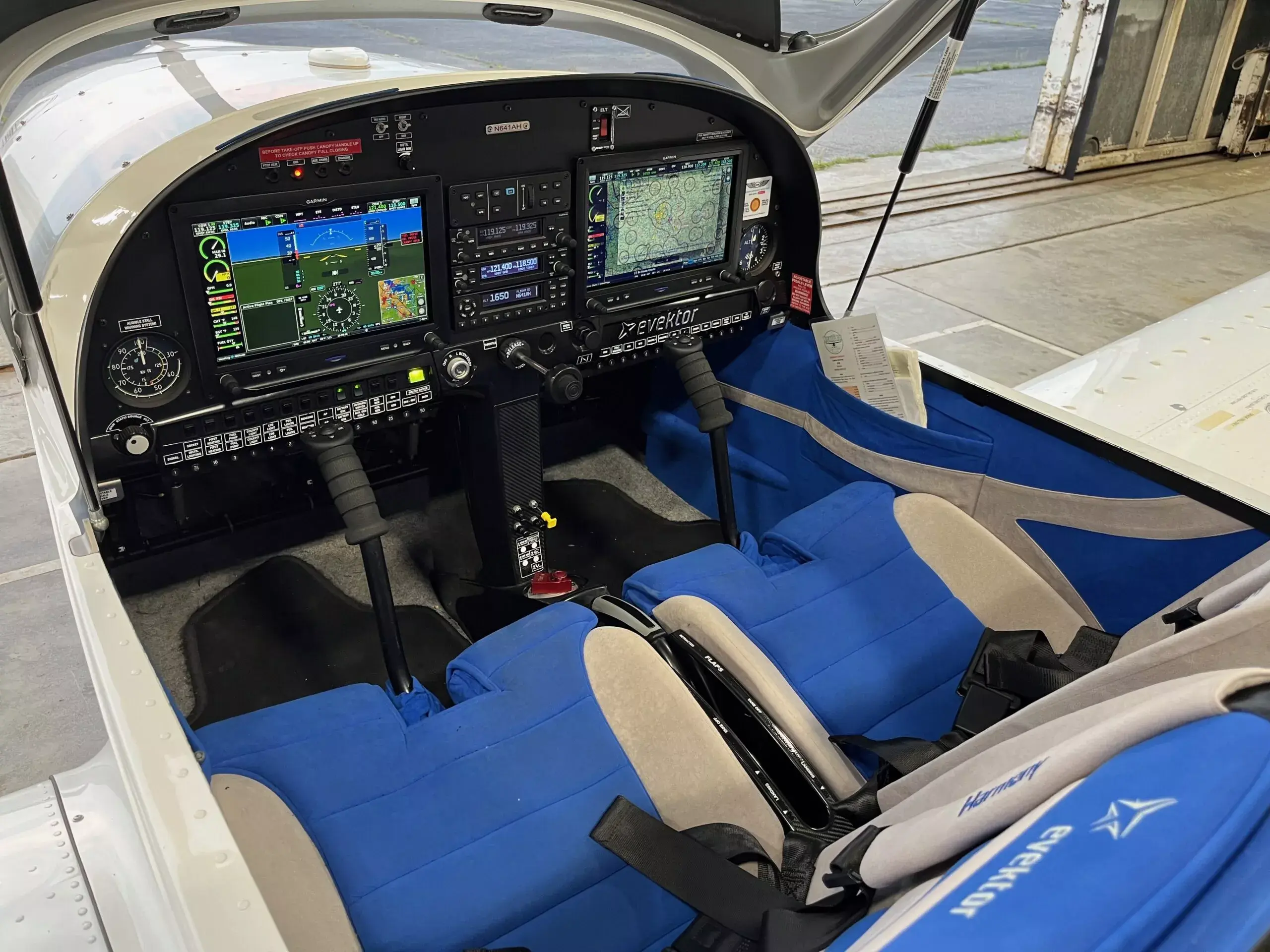
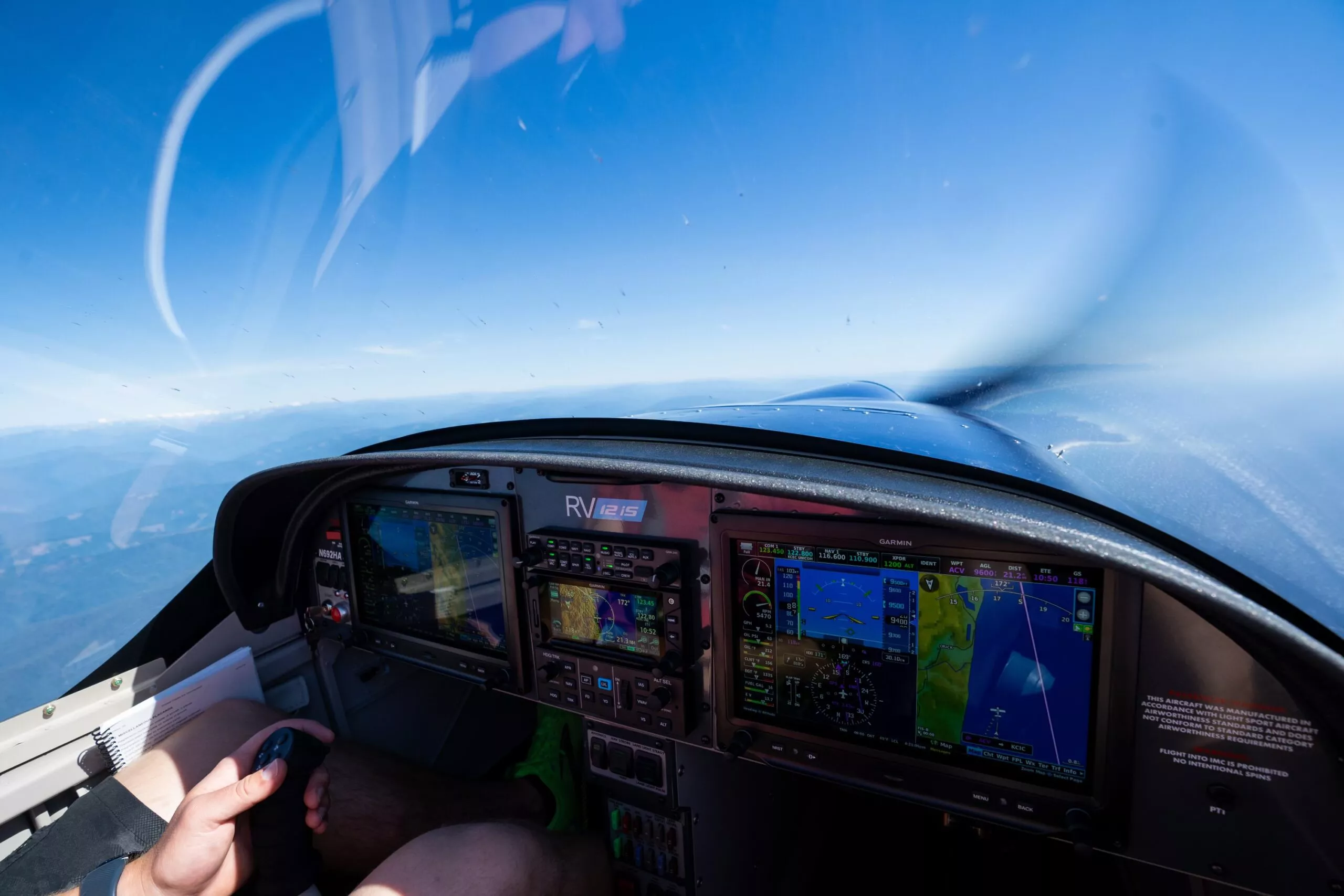
We solve this problem by ensuring our simulator systems mirror our actual training aircraft. Our simulator lab is configured to match the advanced avionics in our standardised fleet:
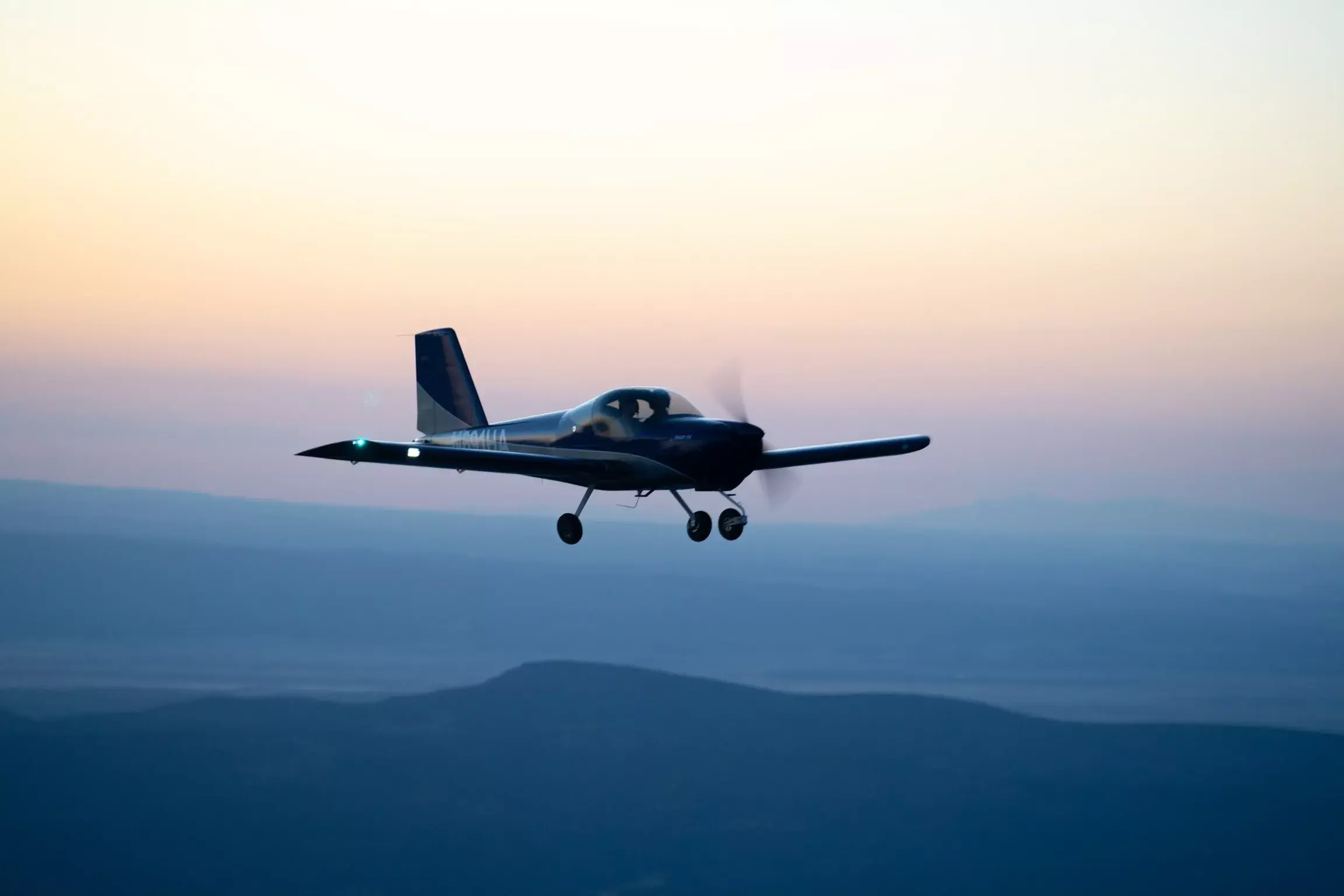
- Avionics Consistency: Our training devices are set up to match the Garmin G3X Touch glass displays and digital autopilots featured in our standardized training fleet of Van’s RV-12iS and Evektor Harmony aircraft.
- Consistent Muscle Memory: Because the flight deck displays are identical, your instrument scan patterns, button pushes, and autopilot settings transfer seamlessly from the simulator to the airplane.
- Dual-Control Practice: Our full-motion Redbird MCX simulator features dual controls, allowing you to practice crew resource management (CRM) and coordinate complex operations with your instructor directly.
This technological alignment ensures you do not waste valuable training hours adjusting to different cockpits, speeding up your progress and saving you money.
Weather-Proof Consistency: Protecting Your Schedule and Your Budget
For student pilots, training momentum is everything. If you experience weeks of bad weather, your skills can degrade, forcing you to spend future lessons reviewing past maneuvers rather than progressing toward your rating.
By utilizing our simulator lab, you can protect your timeline from weather delays:
- 100% Dispatch Reliability: A storm system rolling over Middle Tennessee or North Mississippi might ground our aircraft, but it won’t ground your lesson. You can still complete your scheduled training block in the simulator, keeping your habits sharp.
- Budget Management: Renting a flight simulator is a fraction of the hourly cost of renting a training aircraft. By logging the maximum FAA-allowable simulator hours toward your rating, you can reduce your flight training investment. If you are structuring your training budget, you can review our financing options to see how fully funding your training keeps your momentum going.
- Zero Fuel Surcharges: Simulators do not consume aviation fuel, making your hourly simulator training costs completely predictable and immune to fuel price fluctuations.
Whether you are training at our Shelbyville Municipal Airport (KSYI) headquarters or our Tupelo Regional Airport (KTUP) campus, having immediate access to a dedicated simulator center ensures your training schedule remains steady, regardless of what the weather is doing outside.
Enhance Your Instrument Training with a Simulator Session
Aviation simulation is not a shortcut; it is a professional training accelerator. Earning your instrument rating is an investment in your safety and utility as a pilot. By using our advanced Redbird simulators to master your procedures on the ground, you prepare yourself to handle the aircraft with precision and confidence in the air.
If you want to experience the benefits of simulator training firsthand, the best next step is to visit our advanced training simulators page to book a simulator session with one of our instructors. Let us help you streamline your training path, protect your budget, and guide you safely toward your pilot goals.