What Changes When You Go From Single-Engine to Multi-Engine Flying in 2026

Published by:
Matt Wilkins
Published on:
Updated on:
Read time:
9 min read
When you step up to a twin-engine aircraft for the first time with a couple hundred hours of single-engine time in your logbook, you will feel two things almost immediately. The first is familiarity: the basic controls, the altimeter, and the standard scan pattern you built during your private pilot training. The second feeling, though, is something most pilots do not expect: the workload is not double. It is fundamentally different.
The transition from single-engine to multi-engine flying is not just a matter of handling twice the power. It is about completely recalibrating the habits, flows, and mental models you spent years developing. Some of those habits will transfer beautifully. Others, you will need to break and rebuild from the ground up.
If you are researching a Multi-Engine Rating and trying to figure out what you are actually signing up for, let me give you the honest explanation from the hangar floor.
The First Thing That Changes: Asymmetric Thrust
When you fly a single-engine plane, an engine failure is a linear, high-focus problem. You have one source of thrust, one set of emergency steps, and one objective: glide safely and find a runway or a field.
In a twin, losing one engine does not just cut your thrust in half. It pulls the aircraft sideways. The operating engine continues producing massive thrust on one side of the centerline, while the failed engine creates heavy drag on the other. This asymmetric force is called yaw. It is the central aerodynamic reality you have to master, and it is unlike anything you have experienced in a single-engine cockpit.
When I train pilots, we focus heavily on building the split-second muscle memory needed to identify the failed engine and apply the correct rudder inputs before the airplane has time to develop a dangerous yaw.
Vmc, The Number That Does Not Exist in Single-Engine Training
In a single-engine airplane, your mind is trained on stall speeds, best glide speeds, and maneuvering speeds. Vmc simply does not exist in that vocabulary. But in a twin, it is the first number I will ask you to memorize.
Vmc is the velocity minimum control airspeed. It is the minimum speed at which you can maintain directional control of the aircraft with the critical engine inoperative. Operating below Vmc with a failed engine is one of the most critical scenarios a multi-engine pilot can face.
During our training, we conduct VMC demonstrations at safe altitudes. I want you to see the exact aerodynamic and control boundaries that approach this limit. Our goal is to train your hands and eyes for early recognition and recovery, not just theoretical understanding. When you understand the aerodynamic forces behind Vmc before you climb into the cockpit, you absorb these lessons on a completely different level.
Engine-Out Memory Flows Are Not Like Single-Engine Checklists
In a single-engine aircraft, your emergency checklist is typically something you can run through methodically: fly the plane, pitch for best glide, find a field, and try a restart if you have altitude.
Multi-engine engine-out procedures are different. They require immediate-action memory steps that you must run instantly, without looking at a piece of paper. You must identify which engine has failed, verify the failure to ensure you do not feather the wrong engine, and execute the correct performance and securing flows.
We drill these steps with you until they are completely automatic, so you can execute them calmly and flawlessly under pressure.
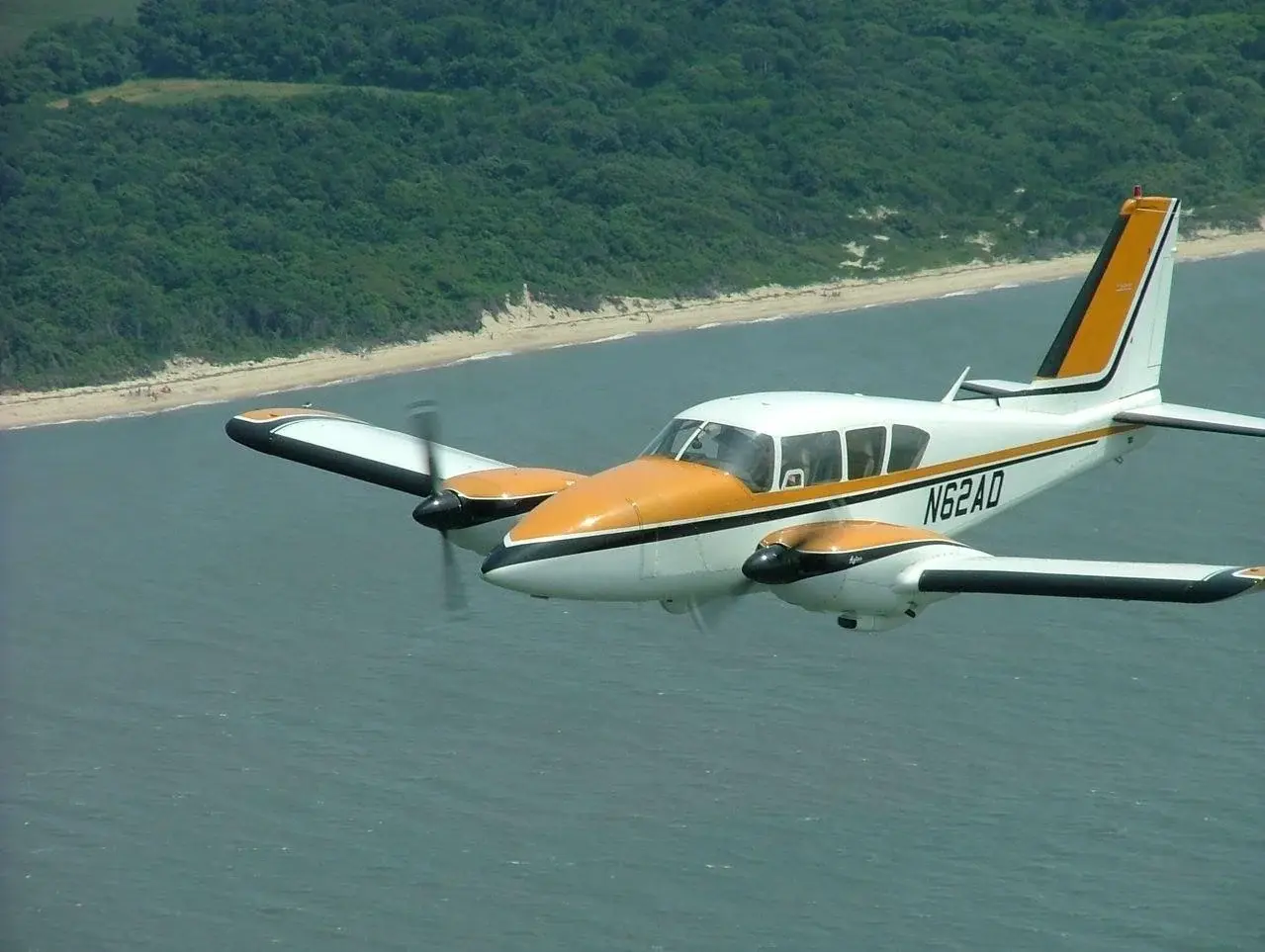
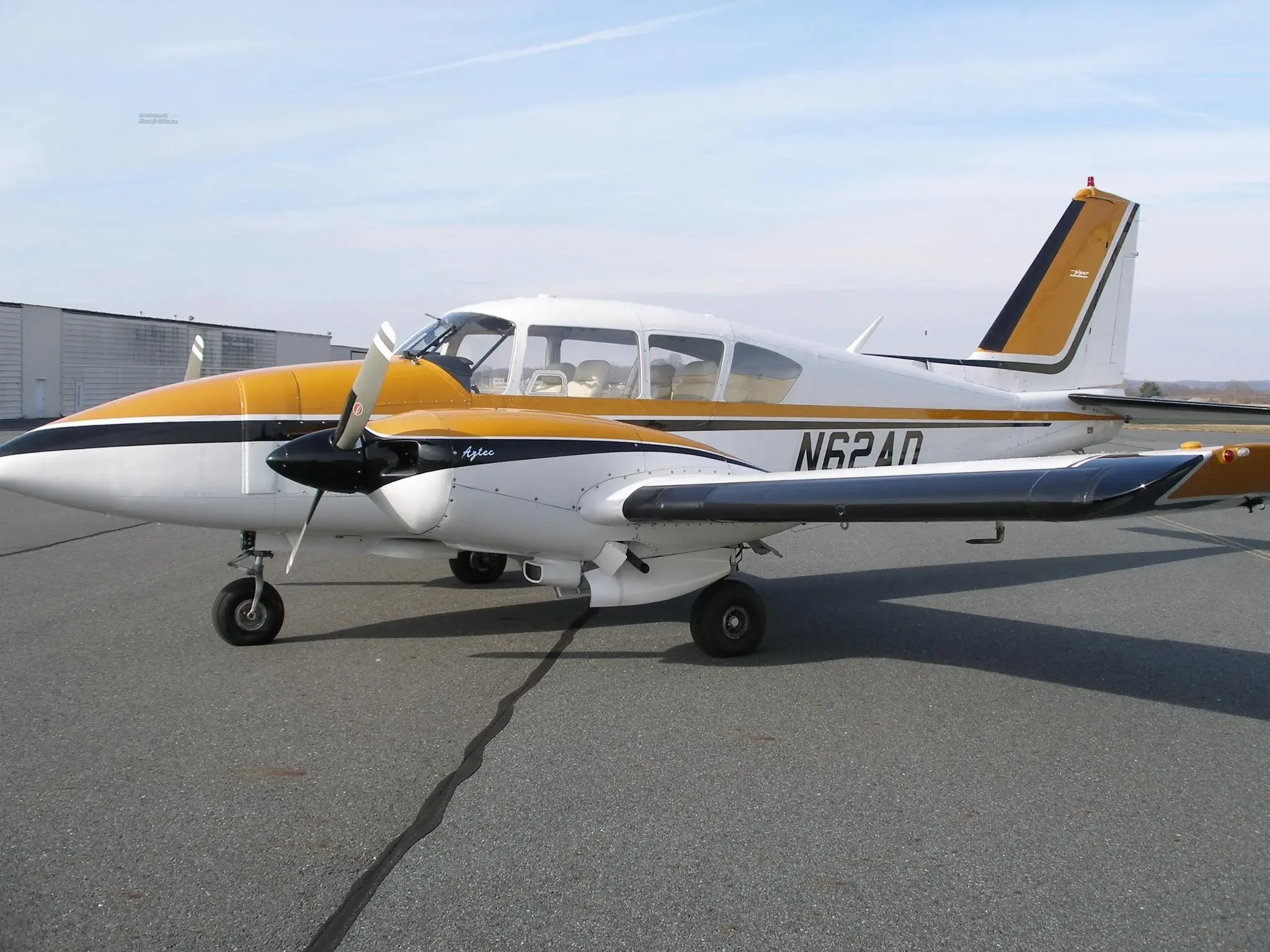
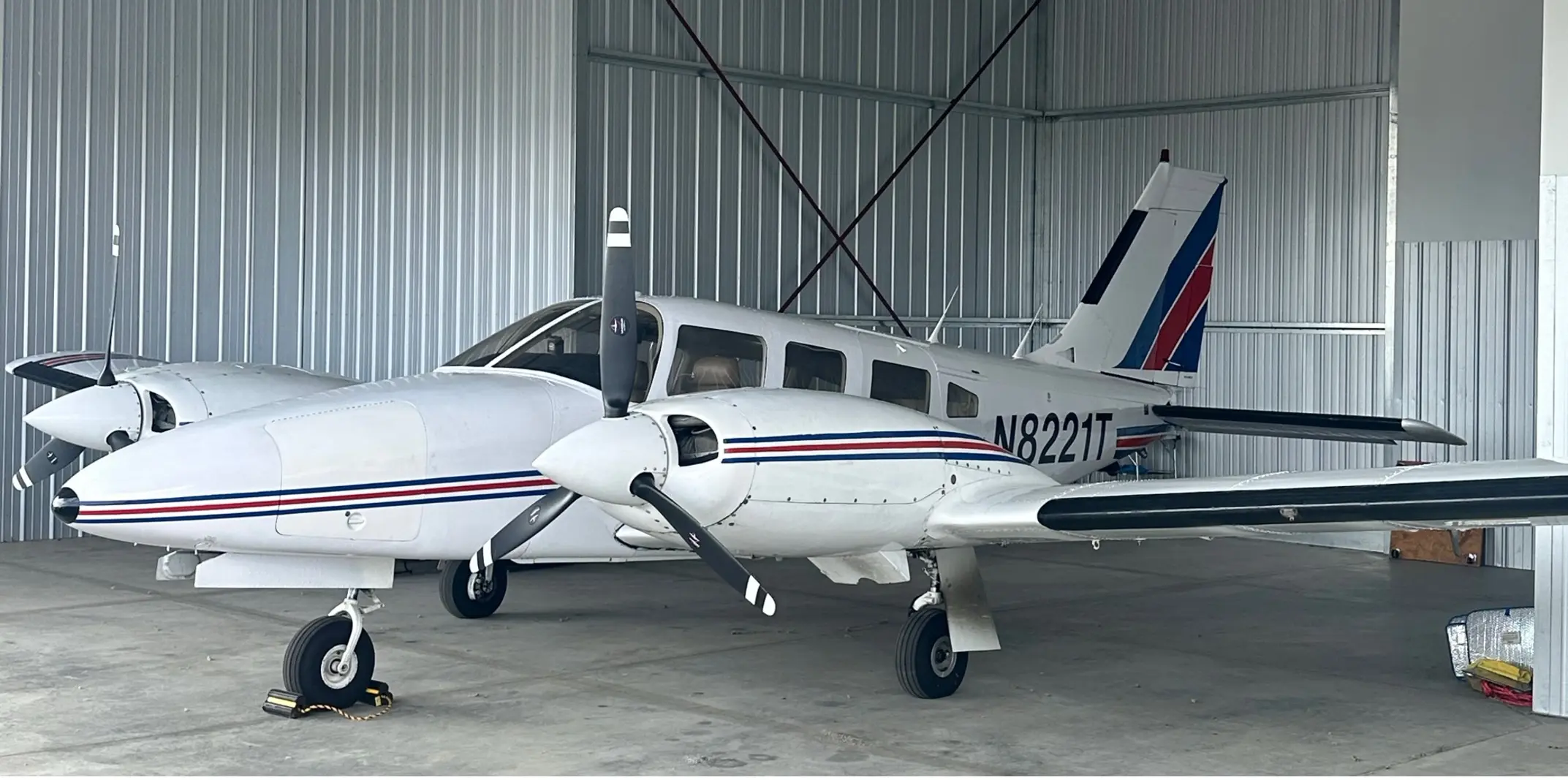
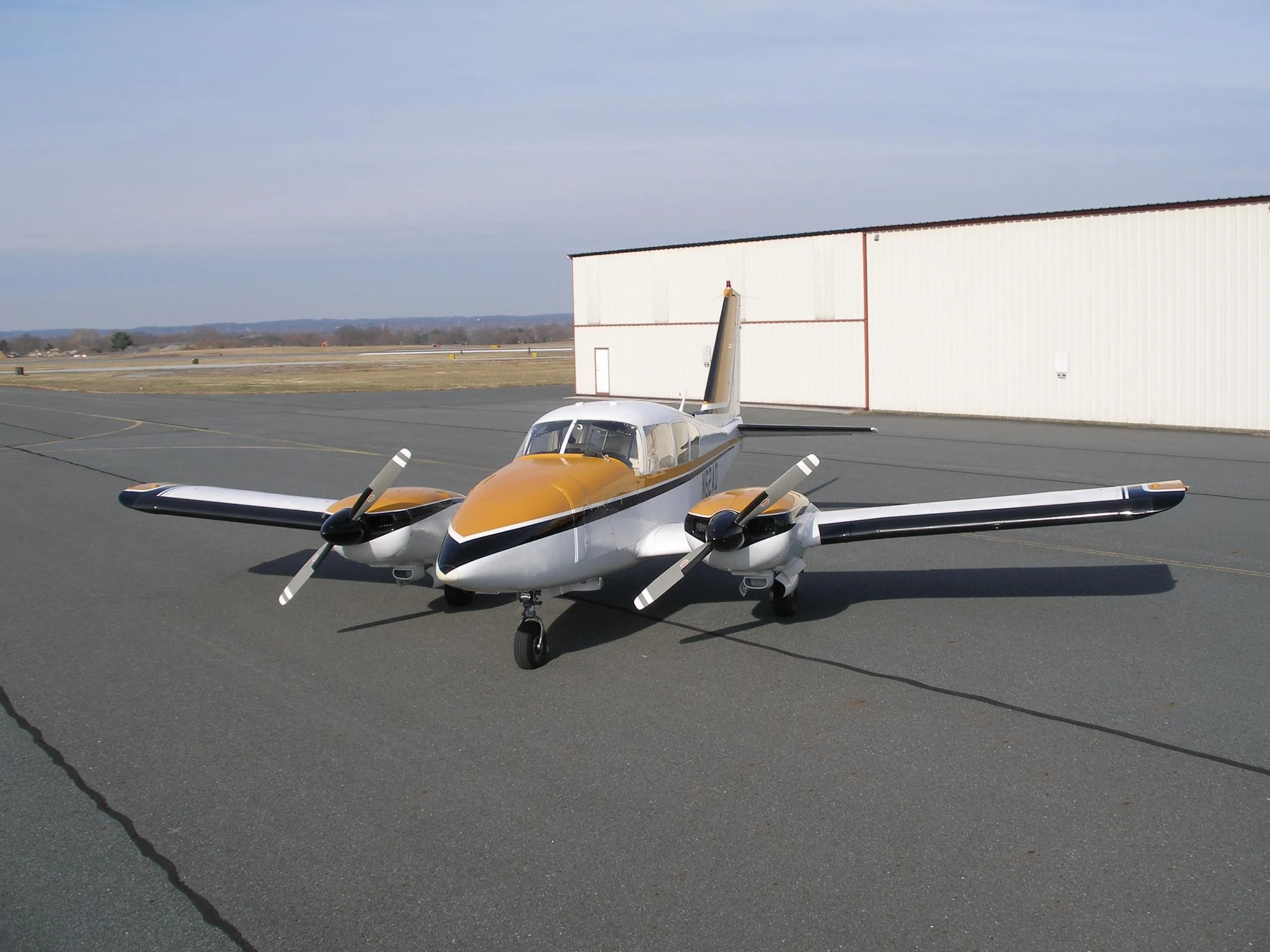
We train all our multi-engine students in our rugged Piper Aztec through our comprehensive Multi-Engine Rating program. Our Aztec gives you a genuine, heavy-twin training environment: real systems, real performance numbers, and real engine-out scenarios that you and your instructor will practice safely at altitude.
Systems Workload: Two of Almost Everything
The scan pattern a single-engine pilot has built over hundreds of hours covers one engine instrument cluster, one fuel gauge, one electrical bus. In a twin:
- Two engines, each with its own oil pressure, oil temperature, fuel flow, and tachometer
- Two fuel systems, crossfeed capability, tank selection, and fuel balance management
- Two sets of performance numbers, single-engine climb rate, all-engine best rate, best angle, and the relationship between airspeed and control margin
None of these are individually complex. The challenge is that they are all active simultaneously, and the workload increase hits students at the same time they are also learning new emergency procedures and unfamiliar aircraft systems.
This is why ground preparation before the first aircraft lesson is not optional, it is the primary factor that determines whether each lesson advances the student or spends most of its time filling knowledge gaps that should have been closed on the ground.
How Your Scan Pattern Has to Change
A single-engine scan pattern is built for one engine, one fuel system, and a simpler systems picture. Pilots who bring that pattern directly into a twin will find that their eyes are not visiting the right gauges often enough and that their workload spikes whenever anything becomes non-standard.
Multi-engine training recalibrates the scan. You learn to include both engine clusters in the routine sweep. You learn to check fuel balance before it becomes a system anomaly. You learn to process more information in the same amount of time, not by moving faster, but by having a more efficient and deliberate pattern that accounts for the full cockpit.
This recalibration takes time and repetition. It is one reason a focused training block, lessons scheduled close together, helps multi-engine students retain the new patterns. Gaps between lessons let the old single-engine habits reassert themselves.
If you want to understand how simulation fits into the transition, we can talk through it. Our Redbird simulators are available for procedure practice before aircraft time, and they are worth using. Whether any sessions log toward the rating depends on the specific device and how the session is conducted. The preparation value is real regardless.
What the Rating Actually Adds to Your Certificate
A multi-engine rating is an airplane multiengine class rating added to a pilot certificate you already hold, not a separate certificate. The privileges it adds still depend on the certificate you have.
A private pilot who earns the multi-engine rating gains private-level multi-engine privileges. A commercial pilot with a multi-engine rating has commercial-level multi-engine privileges. The rating expands the class of aircraft you can fly within the privileges of your certificate, it does not automatically upgrade those underlying privileges.
| Starting certificate | What the multi-engine rating adds |
|---|---|
| Private Pilot | Private-level multi-engine aircraft privileges |
| Commercial Pilot | Commercial-level multi-engine aircraft privileges |
| CFI with multi-engine | Multi-engine instruction privileges (MEI requires additional credential) |
Many career-track students add the multi-engine rating near or during their commercial training, which is why we include it in the Professional Pilot Program path.
How Focused Training Supports the Transition
The transition from single-engine to multi-engine is manageable. It is not easy on the first day, and it is not instant on any day, but pilots who arrive prepared find the progression reasonable within a focused training block.
Prepared means:
- Engine-out memory flows reviewed and drilled before the first lesson
- Vmc understood conceptually before the first VMC demonstration
- Piper Aztec systems studied before the first preflight walkaround
- Logbook, certificate, and medical situation confirmed before scheduling
If you are mapping out your training budget, we partner with Stratus Financial and AOPA Finance to help qualified students access training loans. Take a look at our financing page to see which packages work best for you, and we will help you plan the investment.
Is the Transition Right for You Right Now?
The multi-engine rating is not for pilots who want to check a box. It is for pilots who have a specific next step, commercial training, an instructor credential, a career track that values twin-engine experience, and who are ready to invest preparation before the first lesson.
If you are ready for that transition, we offer a comprehensive Multi-Engine Rating course in our Piper Aztec with structured simulator preparation. Let’s talk through your current pilot hours, review your goals, and schedule a dedicated training block that gets you checked out efficiently.
The transition is real. The preparation makes it manageable.