Are You Ready for Accelerated Multi-Engine Training? Your 2026 Pre-Enrollment Checklist

Published by:
Matt Wilkins
Published on:
Updated on:
Read time:
8 min read
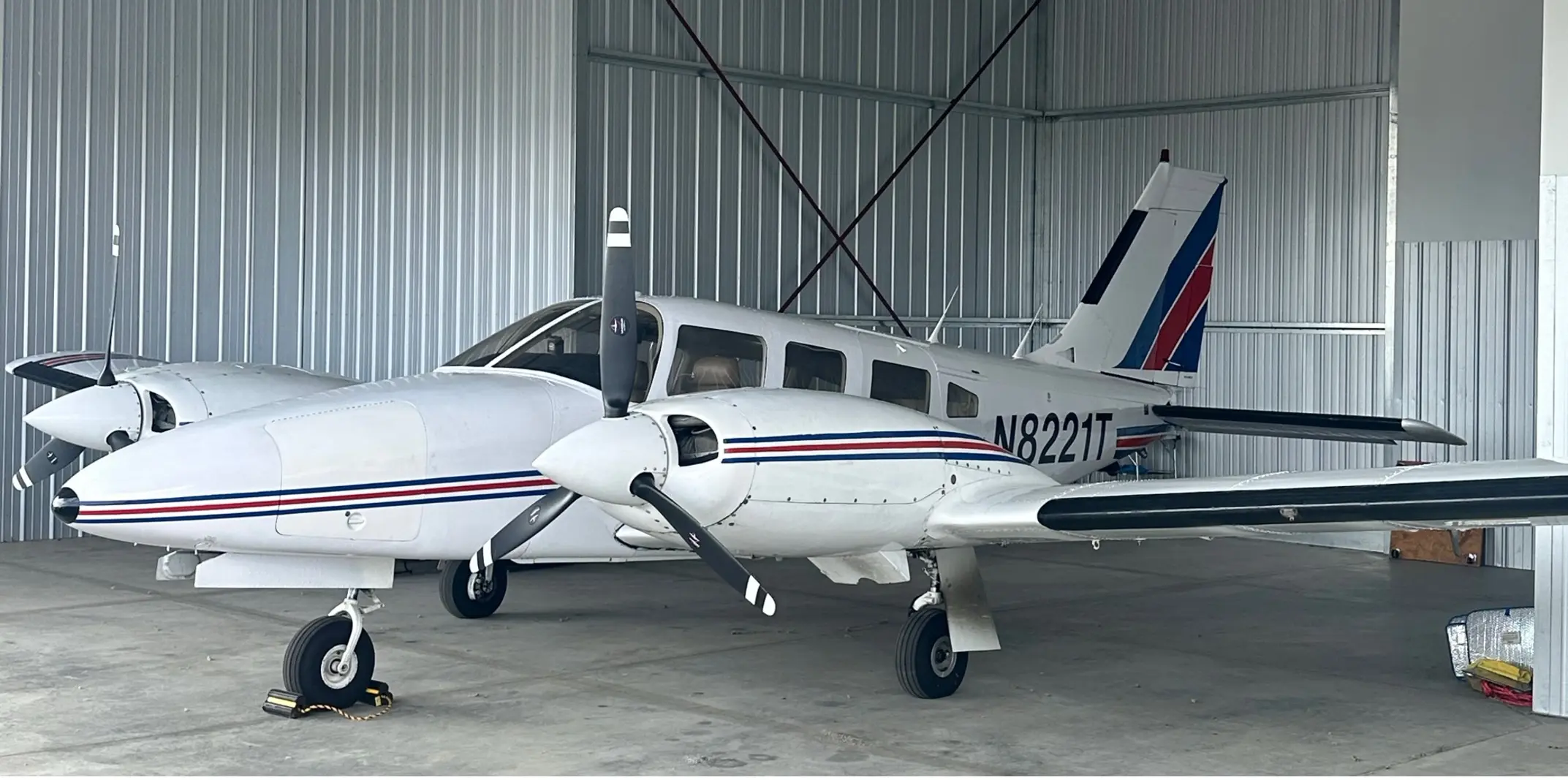
If you are reading this, you probably already know you want to add a multi-engine rating to your certificate. Maybe you have already decided on an accelerated training block: lessons scheduled close together, our Piper Aztec waiting on the ramp, and a highly focused week of hard work. The question for you is not whether to do it. The question is: are you truly ready to do it well right now?
In my years of instructing, I have noticed that the pilots who get the absolute most out of a focused multi-engine block share one thing in common: they handle all their preparation before they ever set foot in the aircraft. The ones who struggle are usually the ones who get tripped up by a minor detail that could have been solved weeks in advance: a logbook question, a medical certificate gap, or a systems-knowledge hole that forces the instructor to stop a flight lesson and explain a basic concept.
I built this pre-enrollment checklist from those exact patterns. Work through it before you give us a call to book your training block. You will fly much more efficiently, spend less money reviewing basics in the cockpit, and show up on day one with total confidence.
Step 1, Confirm Your Certificate and Its Current Status
Before you do anything else, I want you to open your logbook and pull out your current pilot certificate. Verify the following details:
- What level of certificate do you currently hold? (Private, Commercial, ATP, or another grade)
- What specific aircraft category and class ratings are already on that certificate?
- Is your certificate current and ready for operations? (While pilot certificates do not expire, your ability to act as pilot in command depends on your medical, flight review, and currency status.)
Remember, the multi-engine rating is a class rating added to the pilot certificate you already hold. Your flying privileges after you earn the rating will match that underlying certificate level. A private pilot with a multi-engine rating holds private multi-engine privileges, while a commercial pilot holds commercial privileges.
If your goal is to fly commercial multi-engine operations, make sure your commercial certificate paperwork is in perfect order before we book your multi-engine training block. Having that conversation early makes the process incredibly smooth.

Step 2, Check Your Medical Certificate Currency
Under 14 CFR 61.23, the medical certificate you need depends on the privileges you plan to exercise. For private multi-engine flying, you will need at least a valid third-class medical. If you are planning to exercise commercial privileges, you generally need a second-class medical.
Before we schedule your training block, I want you to:
- Locate your medical certificate and confirm the expiration date
- If it has lapsed or is close to expiring, get the exam scheduled with an Aviation Medical Examiner (AME) before we start
- If you have any medical questions, address them with your AME now rather than mid-training
Discovering a medical certification issue after you have already committed to a training block is one of the most frustrating ways to lose time and money. A quick, proactive conversation with an AME protects your timeline and your investment.
Step 3, Review Your Recent Flight Currency
Here is a fact that surprises many pilots: the FAA does not prescribe a minimum number of flight hours to add a multi-engine rating under Part 61. What matters is that your instructor is satisfied with your proficiency and you pass the practical checkride. But to train efficiently, showing up in “recurrent” flying shape is everything.
If you have been flying consistently in the months leading up to your training block, especially if you are instrument-current, you will adapt to the increased workload of a twin-engine cockpit much faster. Your scan habits and cockpit organization will already be sharp.
Before you book your block:
- When did you last fly? If it has been more than two or three months, I highly recommend planning a few single-engine refresher flights before we begin
- Are you instrument-current? If you are, those instrument scan habits and procedural disciplines will transfer directly to your multi-engine work
- Do you have a current flight review? (Make sure you have completed a flight review within the preceding 24 calendar months as required by 14 CFR 61.56)
If you show up in recurrent, active flying shape, we will spend your very first lesson advancing into multi-engine material. If you have been out of the cockpit for six months, we will have to spend that first lesson shaking off the rust in a twin that is far more demanding than your last single-engine plane. Let’s make sure we spend your flight hours on new skills, not reviewing old ones.
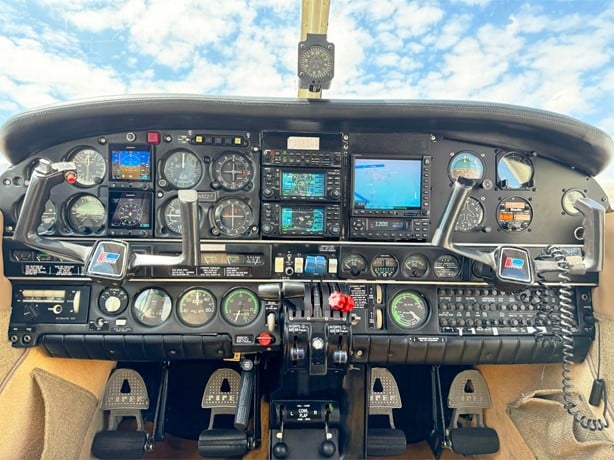
Step 4, Study the Piper Aztec Systems Before You Arrive
This is where prepared students separate from unprepared ones most visibly. When you walk up to the Piper Aztec on the first morning, we expect you to have already spent time with the aircraft systems on paper. That is not a high bar. It is just respect for the aircraft and for your own lesson time.
At minimum, study before you arrive:
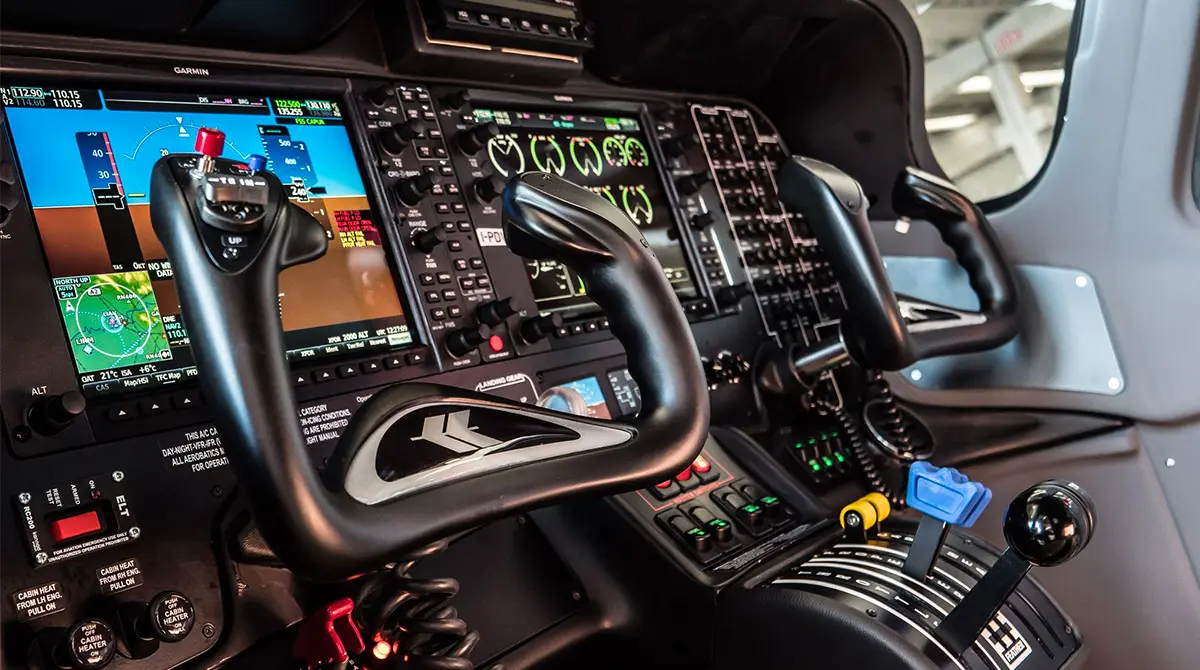
- Fuel system, tanks, crossfeed, selectors, balance management
- Engine instruments, what each gauge monitors and what out-of-range readings mean
- Electrical system, dual buses, alternators, what fails with what
- Landing gear system, operation, indicators, emergency extension
- Hydraulic system if applicable
- Propeller controls, constant-speed props are standard on the Aztec
The Pilot’s Operating Handbook (POH) for the Piper Aztec is the right primary source. The FAA Airplane Flying Handbook chapter on multiengine operations is a strong secondary resource that covers the aerodynamics, engine-out procedures, and performance concepts you will need to understand before the first lesson.
Step 5, Drill the Engine-Out Memory Flows Before Lesson One
The engine-out memory flows in a twin are immediate-action steps, not checklist items you reach for after identifying the problem. They have to be drilled until they run without conscious recall, because in an actual engine failure scenario, the time available for deliberate thinking is short.
The general flow for multi-engine engine-out procedures follows a structure of: identify the failed engine, verify before taking irreversible action, execute the appropriate securing and performance steps. The exact flows depend on the aircraft and phase of flight.
Before you arrive at the aircraft:
- Review the multi-engine engine-out procedures from the POH or your training materials
- Practice saying them aloud, in order, until they are smooth
- Understand the concept of Vmc (velocity minimum control), the minimum airspeed at which directional control can be maintained with the critical engine inoperative, and why it matters so much in early multi-engine lessons
Students who can run the engine-out flows fluently on the ground get more out of the first in-aircraft demonstration. Students who encounter the flows for the first time in the cockpit spend lesson time on recall instead of application.
Talk to us about how simulator work fits your preparation plan. Ground-based practice can help settle engine-out flows and systems procedures before your first Piper Aztec lesson, and we can walk you through how that fits your schedule. Whether any simulator sessions log toward the rating depends on the specific device and how the session is conducted.
Step 6, Understand What “Accelerated” Actually Means
An accelerated training block means lessons scheduled close together, typically multiple sessions per day or multiple consecutive days, so that the new material builds on itself before it has a chance to fade. The benefit is real: pilots who train in a focused block retain procedures more effectively than pilots who space lessons weeks apart.
What it does not mean:
- A guaranteed finish date
- A predetermined number of hours
- A promise that the checkride happens on a specific day
Weather, aircraft availability, examiner scheduling, and your own proficiency on the practical test day all affect the actual timeline. Your instructor recommends you for the practical test when you meet the applicable requirements and demonstrate the required proficiency, that is a proficiency call, not a scheduling decision.
Plan for the block to be productive and focused, not rushed. Arrive prepared, train hard, and trust the process to move at the pace your readiness supports.
Step 7, Confirm Your Goals for the Rating
Before you book, be honest about why you are pursuing the multi-engine rating and what comes next. The rating supports different paths depending on where you are in your aviation career:
| Your current situation | How the multi-engine rating fits | Relevant next step |
|---|---|---|
| Private pilot, personal flying goal | Adds multi-engine aircraft to your flying options | Multi-Engine Rating program |
| Commercial pilot building toward professional path | Adds commercial multi-engine privileges for career-track roles | Professional Pilot Program |
| Working toward CFI credentials | Supports MEI (Multi-Engine Instructor) credential later | Certified Flight Instructor |
| Airline-track with career plan already mapped | Part of an hour-building or hiring-prerequisite strategy | Professional Pilot Program |
Knowing your “why” before you call also makes our first conversation more useful. We can help you connect the multi-engine block to the next real step in your path, not just add a credential without a plan behind it.
If you are thinking about financing, we work with Stratus Financial and AOPA Finance and may be able to help qualified applicants access training funds. Our financing page is a good place to start before you make your final enrollment decision.

Your Pre-Block Checklist at a Glance
Use this before you make the call:
- Certificate, confirmed current, correct category/class, appropriate for your planned privileges
- Medical, current and valid for the privileges you will exercise; AME consulted if any questions
- Currency, flown recently; instrument-current if possible; flight review within 24 months
- Systems study, Piper Aztec POH reviewed, fuel system and engine instruments understood
- Engine-out flows, reviewed and drilled until they run smoothly from memory
- Vmc, understood conceptually before the first VMC demonstration
- Goals confirmed, clear picture of why the rating matters and what comes next
When you can check all seven of those, you are ready to make a productive phone call.
Book the Block When You Can Give It Your Full Attention
Give us a call or reach out through the Multi-Engine Rating program page when your checklist is done. We will review your certificate status, talk through your current currency, and help you figure out whether a focused accelerated multi-engine training block is the right next step for you right now.
The pilots who get the most from this block are the ones who show up prepared. That is a choice you make before you arrive at the ramp.