What Do You Need Before Your First Flight Lesson? 2027 Checklist
Published by:
Matt Wilkins
Published on:
Updated on:
Read time:
8 min read
The night before your first flight lesson, the doubts tend to be about paperwork. Do you need a medical first? A license of some kind? A logbook you were supposed to buy? If you are searching for learn to fly requirements, the list for your first lesson with an instructor is short. You need proof of U.S. citizenship (or TSA approval if you are not a citizen), a booked time, and a willingness to listen during the preflight briefing.
The bigger requirements, a medical certificate and a student pilot certificate, come later, before you fly solo. Students who wait too long to start them are the ones who end up grounded by paperwork. This 2027 checklist sorts everything into “before lesson one” and “in your first weeks,” so you can start your private pilot lessons at Hawkins Flight Academy in Shelbyville (KSYI) or Tupelo (KTUP) without a paperwork pause later.
Your Pre-Lesson Checklist at a Glance
Use this table as your planning sheet. The timing column is the part most new students get wrong.
| Item | When you need it | What it helps you plan |
|---|---|---|
| Proof of U.S. citizenship (or TSA approval) | Before your first lesson | Your first day goes ahead on schedule |
| Medical certificate (third class is enough) | Before solo | Booking an AME visit early, long before solo |
| Student pilot certificate | Before solo | Applying with your instructor in the first weeks |
| Logbook | From lesson one | Every lesson and endorsement is recorded |
| Headset, kneeboard, notebook | Early lessons | Comfort and notes for each debrief |
| A study plan or ground school | First weeks | Less time learning theory in the airplane |
If you are comparing pilot training options near you and want to see how these steps fit the Private Pilot program, the rest of this guide walks through each line.
Bring Proof of Citizenship to Your First Lesson
This is the one item that can stop lesson one. Under a Transportation Security Administration (TSA) rule, every flight school must confirm a student’s U.S. citizenship before any flight training begins. That includes time in the airplane and time in a training device such as a simulator. We record that check in your training records.
Bring government-issued proof of U.S. citizenship, such as a valid U.S. passport. A driver’s license alone shows identity, not citizenship. If you are not sure your documents qualify, contact us before your first lesson and we will tell you what to bring.
If you are not a U.S. citizen, TSA has to approve your training before your first lesson. Start that process early, and talk with our team about it before you book. Once your citizenship or approval is on file, you will not need to repeat this step for every lesson.
Age Rules Apply to Milestones, Not to Lesson One
The FAA ties its age limits to certificates, not to your first lesson. Two numbers matter for airplane students:
- 16: the minimum age to hold a student pilot certificate, which you need to solo.
- 17: the minimum age to earn the private pilot certificate itself.
The FAA also expects you to read, speak, write, and understand English, because radio calls and written tests are in English.
The FAA does not set an age for dual lessons with an instructor, so a teenager can build a plan around study, early flights, and a student pilot certificate timed for solo. If you are 13 to 18 and want a first taste of aviation, our summer camp at Shelbyville is another way in. Parents planning ahead can contact us to talk through a starting age and schedule that fits.
Book Your FAA Medical Early, Even Though Lesson One Doesn’t Need It
You do not need a medical certificate to take lessons with an instructor. You do need one before you solo in an airplane under most training paths, and a third-class medical is enough for student pilot flying. The FAA explains the timing on its medical certificate FAQ.
Medicals are issued by an Aviation Medical Examiner (AME), a doctor the FAA designates. You start the application online in the FAA’s MedXPress system, then bring the confirmation number to your exam. The FAA’s medical certification page links to MedXPress and the AME locator.
We push students to book it early for a simple reason. If a medical question comes up, you want to learn that in week two, before you have invested much in training, not the week your instructor is ready to sign you off for solo. If you have a condition or take a medication and wonder how it affects you, an AME is the right person to ask. We cannot give medical advice, but we can help you plan your first month of training around the appointment.
Get Your Student Pilot Certificate Started Before Solo
A student pilot certificate is required before you solo. It is not required to take lessons. The FAA describes both points on its student pilot certificate page.
You apply online through the FAA’s IACRA system, and your flight instructor helps you complete and submit it. Processing takes time, and the plastic card arrives by mail, so we start the application in your first few weeks of lessons rather than waiting until solo is close.
Solo also needs your instructor’s logbook endorsements, which confirm you have been trained and tested on the required items. Those come when you are ready, not on a set date. Our guide to your first 10 private pilot lessons shows how the early lessons build toward that point.
Start a Logbook and a Study Habit in Week One
Your pilot logbook is your official training record. Every lesson goes in it, and your instructor signs each dual entry. Bring it to every lesson, and keep it neat. Later, the hours and endorsements in it show that you meet the experience rules for your checkride.
The second habit is studying between flights. Every hour you spend learning aerodynamics, airspace, and weather on the ground saves time in the airplane. The FAA publishes the Pilot’s Handbook of Aeronautical Knowledge for free, and reading the first chapters before lesson one makes the preflight briefing far easier to follow.
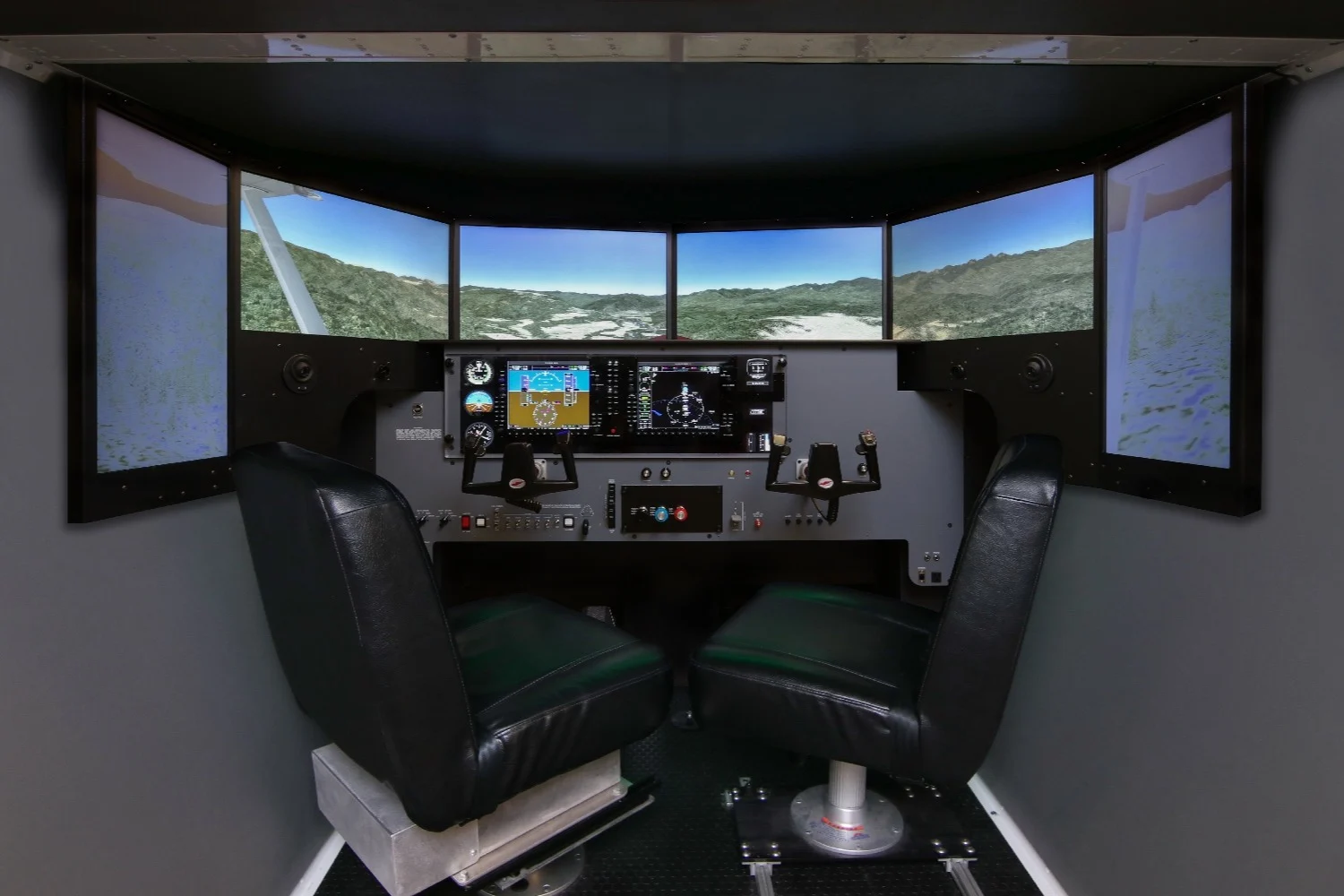
If you prefer a classroom, our ground school is a 14-week, in-person course taught by a certificated flight instructor. It prepares you for the FAA knowledge test, the written exam you pass before your private pilot checkride. Our Redbird simulators also let you rehearse procedures on the ground before you pay for airplane time.
What to Bring to the Airport on Day One
Pack light and plan for comfort. A good day-one bag holds:
- Your proof of citizenship (first lesson only)
- Your logbook, or plans to buy one with your instructor
- A notebook and pen for debrief notes
- A kneeboard, if you have one
- A headset, if you own one
- Water, sunglasses, and a snack
Wear comfortable clothes and closed-toe shoes. You will walk around the airplane during the preflight inspection, climb in and out, and work the rudder pedals with your feet.
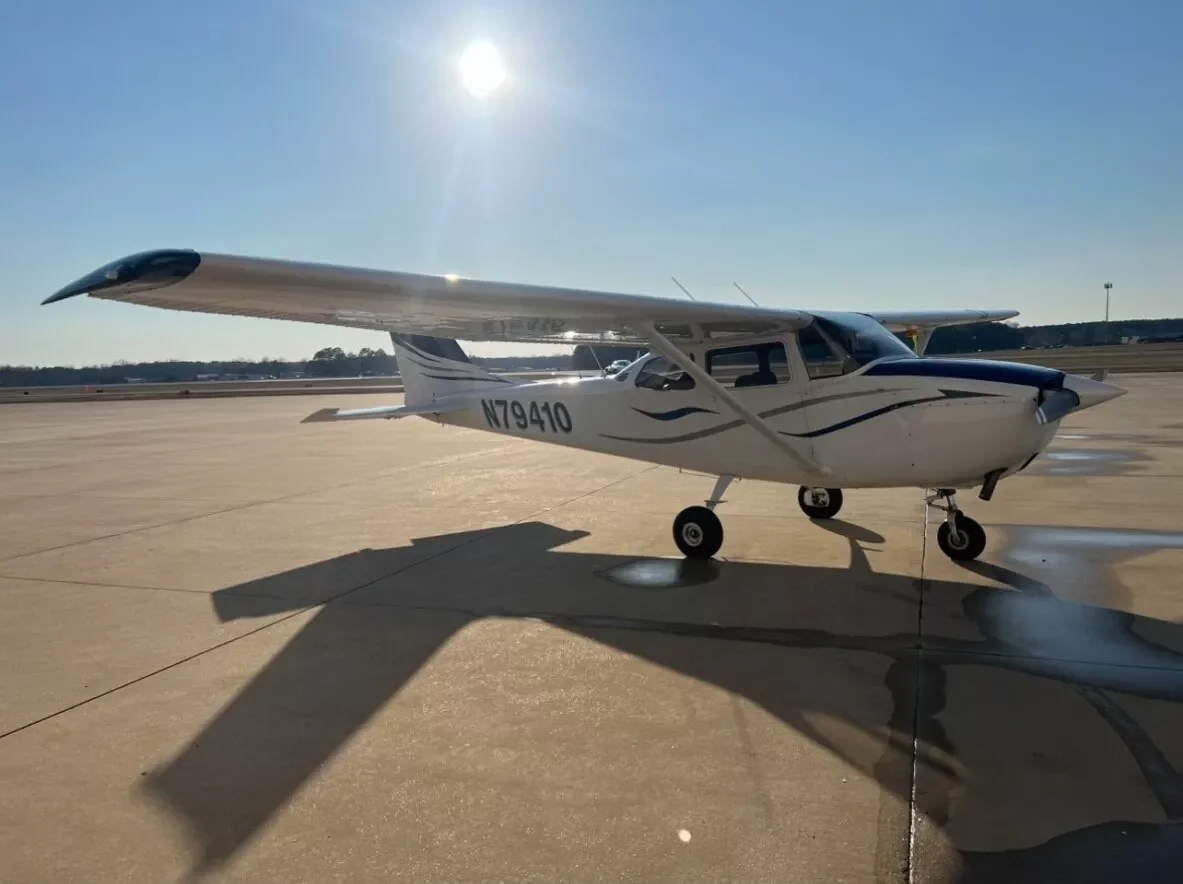
Headsets are the biggest early purchase for most students, so do not rush it. Your instructor will tell you what you need on day one and what can wait until you have flown a few times and know what fits. Our team at our Shelbyville and Tupelo locations is happy to walk you through it when you arrive.
Plan the Money Before the Paperwork Starts
None of these items is expensive on its own, but the medical exam, a headset, a logbook, and study materials arrive in the same few weeks as your first lessons. Building them into your plan keeps a small bill from feeling like a surprise.
If you want to fund training before you start, we work with Stratus Financial and AOPA Finance, so you can look at options before training gaps appear. Our financing page explains how to apply.
Frequently Asked Questions
Do I need a medical certificate before my first flight lesson?
No. You do not need a medical to take lessons with an instructor. Most airplane students get a third-class medical before solo. We recommend booking your AME appointment in your first weeks so any question surfaces early.
Do I need a student pilot certificate to start lessons?
No. A student pilot certificate is required before solo, not before lesson one. Your instructor helps you apply through IACRA, and we usually start it in the first few weeks because processing takes time.
How old do I have to be to learn to fly?
The FAA sets 16 as the minimum age to solo an airplane on a student pilot certificate and 17 to earn the private pilot certificate. The FAA sets no age for lessons with an instructor, and our summer camp serves ages 13 to 18.
What ID do I need for my first lesson?
Bring government-issued proof of U.S. citizenship, such as a valid U.S. passport. TSA requires us to verify it before training starts. If you are not a U.S. citizen, TSA must approve your training first.
Should I take a discovery flight before I start?
Most students do. A Discovery Flight is a 1 to 1.5 hour session with a preflight briefing, 30 to 45 minutes of flying, and a debrief. It is a good time to meet an instructor and ask what to bring for your first full lesson.
Is learning to fly the same in Shelbyville and Tupelo?
The requirements are the same at both bases because the FAA and TSA rules apply everywhere. The airports differ. See our pages for pilot training in Shelbyville and pilot training in Tupelo to choose your base.
Book a Discovery Flight and Start Your Checklist
You now know that the list before lesson one is short: proof of citizenship, a booked time, and comfortable clothes. The medical, the student pilot certificate, and your study habit come in the weeks after, and our instructors help you time each one.
The easiest way to start is a Discovery Flight at Shelbyville or Tupelo. You will meet an instructor, take the controls, and leave with a clear plan for your first month. Book your Discovery Flight and bring your passport.