Flight School vs Freelance Flight Instructor: Which Fits You in 2027?

Published by:
Matt Wilkins
Published on:
Updated on:
Read time:
8 min read
It is Saturday morning, the weather is perfect, and your lesson is off. The rental airplane has a squawk from the last renter, and your instructor is already booked with someone else this afternoon. If you are comparing a flying school near you with a freelance flight instructor for your private pilot lessons, that Saturday is the difference worth understanding.
You earn the same FAA private pilot certificate either way, and both paths can work well. Which one fits you mostly comes down to two things: whether you already have dependable access to an airplane, and how much structure you want around your study. This 2027 guide compares the two setups piece by piece and gives you a simple way to decide, including how we run the school side at Hawkins Flight Academy in Shelbyville (KSYI) and Tupelo (KTUP).
You Get the Same Certificate, So Compare What Surrounds the Instructor
A CFI is a certificated flight instructor, a pilot the FAA has authorized to teach. Under Part 61 of the FAA rules, a freelance CFI can train you all the way to your checkride without a school behind them, and you still need at least 40 hours of flight time for an airplane private pilot certificate. Part 141 schools hold an FAA pilot school certificate and teach approved courses, which the FAA explains on its pilot schools page. If that rule difference is your main question, our Part 61 vs. Part 141 guide covers it.
This post looks at something else: who supplies each piece of your training and who backs it up when something goes wrong.
| Training piece | Freelance CFI plus a rental | Structured flight school |
|---|---|---|
| Airplane | You rent from an FBO or club, or fly your own | The school’s fleet, booked with your lesson |
| Maintenance | The owner or club handles it on their timeline | The school coordinates it with the schedule |
| Instructor coverage | One person; their calendar is your calendar | Other instructors and aircraft in the same system |
| Ground study | Usually self-study or an online course | Often a classroom course, such as our ground school |
| Simulator practice | Depends on what is nearby | Built into the program at many schools |
| The plan | You and your CFI build it together | A defined Private Pilot program with milestones |
| Best fit | Owners, club members, flexible learners | Students starting from zero who want momentum |
What a Freelance CFI Does Really Well
A good freelance instructor can be an excellent teacher, and many pilots learned exactly this way. The arrangement is personal and flexible. You work with one person, you set the pace together, and you can often train at the airport closest to home.
It shines when the airplane is already sorted. If you own an airplane, share one with a partner, or belong to a well-run flying club, a freelance CFI fills the one missing piece. You avoid paying for structure you do not need. Many licensed pilots also use freelance instructors for flight reviews and specific endorsements, because the job is narrow and well defined.
A freelance CFI can also give every endorsement you need along the way: your solo endorsement, the sign-off for your knowledge test and the recommendation for your checkride. If you want a feel for how those early milestones line up, our week-by-week guide to your first 10 lessons walks through them.

Where a Do-It-Yourself Setup Tends to Lose Time
In the freelance model, most lost time comes from the coordination around the teaching. Three things usually cause the gaps.
Airplane availability. Rental airplanes are shared with other renters, and each FBO or club sets its own checkout and insurance rules. Airplanes provided for flight instruction for hire also go through extra inspections, including 100-hour checks, so a busy rental can be down for inspection on the day you planned to fly.
Instructor coverage. A freelance CFI is one person with one calendar. When they are sick, on vacation or flying another student, your lesson waits. A new instructor or a different airplane usually means some review before you move forward.
Studying alone. Self-study works for disciplined learners, but many students end up learning theory in the airplane, with the engine running and the clock on. Long breaks between lessons add review time at the start of each flight, which our first-month budget plan explains in dollars and lessons.
Our co-founder Matt Wilkins knows the stall from the inside. He earned his private certificate at Auburn, began instrument training, then stepped away because of cost and unclear next steps. That experience is a big part of why Hawkins runs training as defined programs.
What a Structured School Adds Around Your Instructor
At Hawkins, you train one-on-one with a dedicated flight instructor, part-time or accelerated, and the school handles the pieces around that lesson.
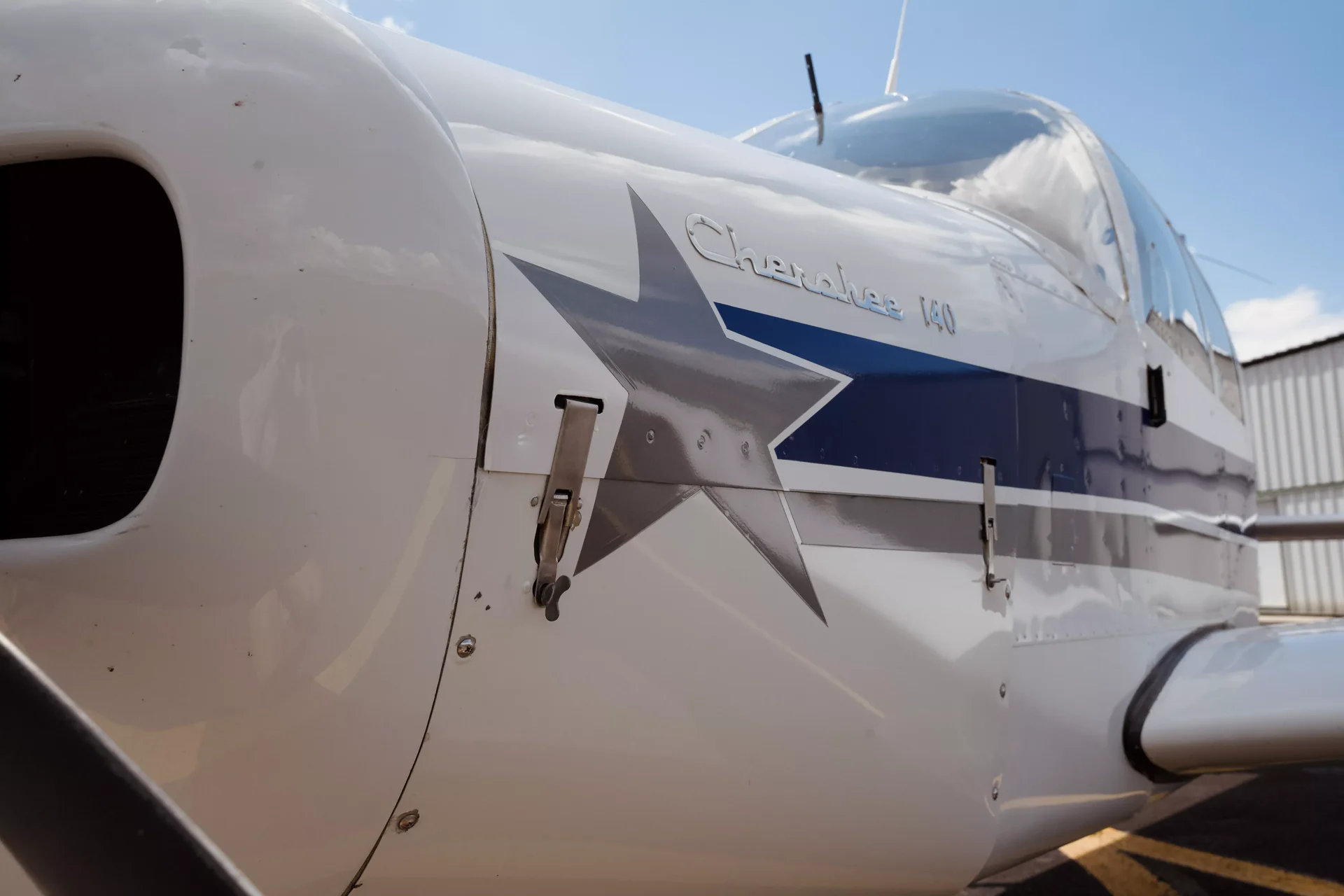
A shared fleet at two bases. Most of our fleet is based at Shelbyville, with RV-12iS trainers, an Evektor Harmony, a Piper Cherokee and a Piper Aztec. Tupelo flies RV-12iST trainers and a Cessna 172. Our RV-12s share the same Garmin G3X cockpit, so habits from one airplane carry into the next. You can meet each aircraft in our fleet.
In-house maintenance. Our in-house maintenance team looks after our fleet, which helps keep airplanes on the schedule. You and your instructor still check the airplane before every flight, as every pilot does.
Ground school and simulators. Our 14-week in-person ground school is taught by a CFI, so weather, airspace and regulations get learned in a classroom instead of at 3,000 feet. Our Redbird simulators let you rehearse a procedure on the ground before you pay for airplane time on it.
Pricing, financing and proof. We price training as programs, so on our RV-12s you are not renting an airplane by the hour. We work with Stratus Financial and AOPA Finance, and you can compare options on our financing page. Hawkins was also named a 2026 AOPA Distinguished Flight School, based on reviews from our students.

A Simple Way to Decide Which Setup Fits You
Use these lists as a gut check. If most of your answers land on one side, that is your starting point.
Choose a structured flight school if:
- You are starting from zero and want one plan from first lesson to checkride.
- You do not own an airplane or belong to a club with reliable availability.
- You want ground school and simulator practice built into your training.
- You plan to keep going to instrument, commercial or instructor ratings.
- You want financing options and a clear picture of cost before you start.
Choose a freelance CFI if:
- You own or co-own an airplane, or your club has airplanes free when you need them.
- You already know an instructor you trust and their schedule matches yours.
- You are a disciplined self-studier who likes building your own plan.
- You need a flight review or one specific endorsement, not a full program.
If you live near either of our bases, the Shelbyville and Tupelo pages show what training at each airport looks like day to day. At Tupelo Regional, a towered airport, you talk with air traffic control from the start.
Keep Momentum Whichever Path You Pick
The setup matters less than how steadily you fly. Whichever model you choose, book lessons close together and start studying before you need to.
A few habits help in both setups. Get your student pilot certificate started early, since you need it before you solo, as the FAA explains on its student pilot certificate page. Keep a simple training log of what you covered and what comes next, so a substitute instructor can pick up quickly. And sort out your medical and documents before they become the thing holding you back; our pre-lesson checklist lists them.
Frequently Asked Questions
Is a private pilot certificate from a freelance CFI the same as one from a flight school?
Yes. The FAA issues the same private pilot certificate whether you trained with an independent instructor or at a school. You meet the same experience requirements and pass the same knowledge test and checkride. Our Private Pilot program follows that same FAA standard.
Is a freelance flight instructor cheaper than a flight school?
Sometimes the hourly numbers look lower, but the total cost depends on how steadily you fly. Cancellations, long gaps and repeat lessons add up in either setup. Our financing page shows the funding options we work with if cost is your main concern.
Can I switch from a freelance CFI to a flight school partway through?
Yes. Your logbook and endorsements come with you. Expect your new instructor to fly with you first to see where you are, and plan for some review if you switch airplanes. Contact us through our discovery flight page and we can talk through where you would pick up.
What should I bring to my first lesson either way?
You need proof of U.S. citizenship before any flight training starts, plus a willingness to listen during the briefing. The medical and student pilot certificate come before solo. Our pre-lesson checklist covers the rest.
Do I need ground school if I train with an independent instructor?
You need to pass the FAA knowledge test either way, so you need a study plan. Some students self-study; others want a classroom with a CFI and classmates. Our ground school is the in-person option.
Fly With Us Once Before You Decide
The fastest way to compare is to sit in the airplane. Book a Discovery Flight at Shelbyville or Tupelo, meet our team, fly one of our airplanes and see how our program fits around your schedule. After an hour at the airport, you will know a lot more about which setup suits you, and you can start your private pilot lessons on the path that keeps you flying.