Your First 10 Private Pilot Lessons in 2027: Week-by-Week Guide

Published by:
Matt Wilkins
Published on:
Updated on:
Read time:
8 min read
The night before your first lesson, you probably know two things: you want to fly, and you have no idea what the next month looks like. Will lesson three feel like lesson one? When do landings start? How often should you even be at the airport? The spacing question deserves the most thought, because how you space your private pilot lessons decides whether each flight builds on the last one or spends half its time catching up.
Your first ten lessons usually move from “how the airplane behaves” to “how to fly a traffic pattern and land it,” and two to three lessons a week is the rhythm we recommend for most students at Hawkins Flight Academy. At that pace, ten lessons fill about a month. This guide walks through that month week by week, at our Shelbyville (KSYI) or Tupelo (KTUP) base, so you can plan your calendar, your study time, and your budget before the first engine start.
Start With One Flight, Then Plan the Month
Most students begin with a Discovery Flight. It is a 1 to 1.5 hour session with a preflight briefing, 30 to 45 minutes of hands-on flying, and a debrief. Use it to meet an instructor, feel the controls, and ask how lessons would fit your schedule.
Once you enroll in our Private Pilot program, the goal for the first month is steady repetition. Each lesson leans on the one before it: slow flight makes more sense once you can hold altitude, and landings make more sense once you can fly a stable pattern. When lessons sit close together, that chain holds.
Two pieces of paperwork belong on your radar now. You do not need a student pilot certificate or a medical certificate just to take lessons with an instructor. You do need a student pilot certificate before you solo, and most airplane students get a medical before solo as well. A third-class medical is enough for student pilot flying. Starting both early keeps a paperwork delay from pausing you later. The FAA explains the student pilot certificate on its Become a Pilot page.
How the First Ten Lessons Build on Each Other
Here is a common way the first ten lessons build at two to three lessons a week. Your instructor sets the actual order and pace based on how you fly, the weather, and the airplane schedule, so expect some lessons to repeat or swap places.
| Week | Lessons | Common focus | What it sets up |
|---|---|---|---|
| Week 1 | 1 to 3 | Preflight, taxi, straight-and-level flight, climbs, descents, and turns | Control feel and trim, the base for every later maneuver |
| Week 2 | 4 to 6 | Slow flight, stall awareness and recovery, more radio work | Comfort near the slow end of the airspeed range, where takeoffs and landings happen |
| Week 3 | 7 to 8 | Ground reference maneuvers and the traffic pattern | Wind correction and a repeatable pattern |
| Week 4 | 9 to 10 | Takeoffs and landings in the pattern, basic emergency procedures | The skills your instructor checks before talking about solo |
Every Private Pilot student builds this same foundation. The maneuvers are standard training content, described in the FAA’s Airplane Flying Handbook, which is worth skimming before week one.

Week 1: Learn How the Airplane Wants to Fly
Your first three lessons are about control feel. You walk around the airplane with your instructor, learn the preflight checklist, and taxi. In the air, you practice the four basics: straight-and-level flight, climbs, descents, and turns. You learn to trim the airplane so it holds attitude without you fighting it.
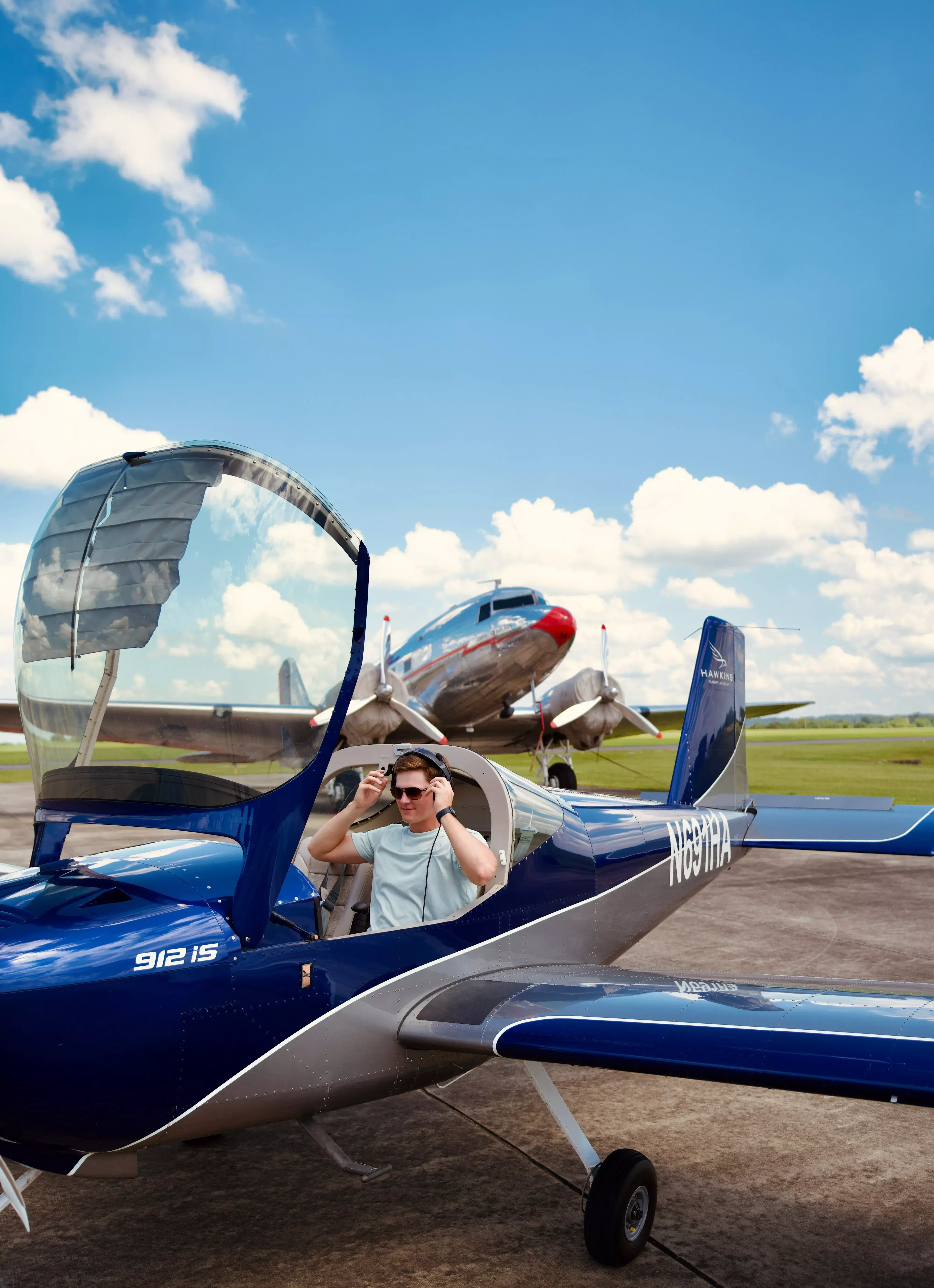
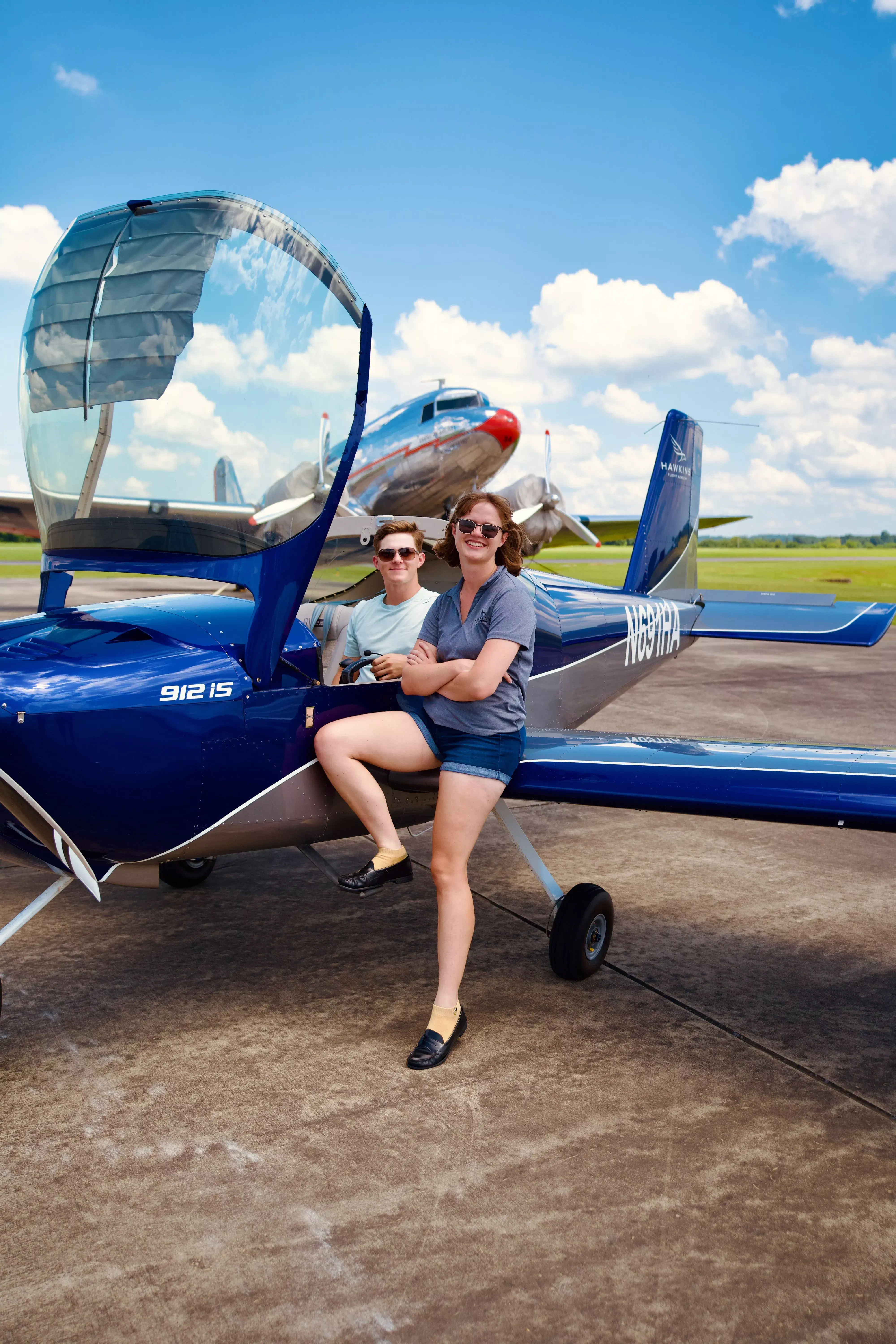
Plan on a briefing before and a debrief after each flight. The debrief is where your instructor tells you what to review before the next lesson, so write it down. Our RV-12s share the same Garmin G3X cockpit, so what you learn in one airplane carries to the next. Your attention goes to flying instead of hunting for a gauge, and you can meet the aircraft in our fleet.
Week 2: Get Comfortable at Slow Speeds
Lessons four through six usually bring slow flight and stalls. Most students find that word intimidating before they try it. Your instructor shows you how the airplane feels as it slows down, what the stall warning sounds like, and how to recover calmly. You fly close to these speeds near the ground on every approach, so comfort here pays off in week four.
This is also where a gap in your schedule starts to hurt. If lesson five comes ten days after lesson four, you will likely spend the start of it rebuilding control feel from week one. At two or three lessons a week, you start each lesson close to where the last one ended. Our guide on keeping pilot training on track goes deeper on why gaps add time.
Week 3: Add Wind and the Traffic Pattern
Lessons seven and eight move you closer to the ground with ground reference maneuvers, such as flying a steady track around a point while the wind pushes you off it. You learn to see wind drift and correct for it. Then you fly the traffic pattern, the rectangle every airplane flies to line up for landing.
Your base changes how this week feels. At Tupelo Regional (KTUP), the airport has a working control tower, so you talk with air traffic control from your early lessons. Radio calls get easier because you make them every flight. In Shelbyville, our training headquarters, you build the same pattern habits close to home base, and your instructor plans the radio and airport experience your training needs.
Week 4: Put It Together With Takeoffs and Landings
Lessons nine and ten bring the part most students circle on the calendar: takeoffs and landings, lap after lap in the pattern. Trim from week one, slow-speed control from week two, and wind correction from week three all come together in the last minute before touchdown.
Your instructor also introduces basic emergency procedures, like what to do if the engine quits. Landings at lesson ten are still a work in progress for most students. The aim is a pattern you can fly the same way twice, so each lap teaches you something new. Solo is a separate milestone with its own sign-off, and our timeline guide covers how the rest of the certificate comes together.
What to Do Between Lessons
A good week of between-lesson work keeps the flights productive:
- Review your debrief notes the same day.
- Chair fly the next lesson: sit at a table, say the checklist out loud, and walk through each maneuver.
- Study one topic for the FAA knowledge test, such as airspace or weather.
- Book your next two or three flights before you leave the airport.
Our 14-week, in-person ground school is taught by a Certified Flight Instructor, and it gives your study time a fixed weekly slot next to your lessons. When the weather cancels a flight, a session in our Redbird simulators lets you rehearse the procedure before you pay for aircraft time, so the week keeps moving.
If you work full time, the same rhythm still applies with a different calendar. Our post on flight school while working full time shows how to protect recurring lesson windows around a job.
Pick a Weekly Rhythm You Can Keep
Two or three lessons a week is our recommendation, and the best pace is the one you can keep for months. Five lessons in one week followed by three weeks off puts you back to rebuilding control feel. You can train part time or on an accelerated schedule at either base, and we build the plan around your real availability.
Money is part of keeping the rhythm. A month of steady lessons goes smoothly when funding is settled before you start. We work with Stratus Financial and AOPA Finance, so you can look at financing options before training gaps appear. Consistent flying protects your progress, and settling the money side early helps keep it consistent.
Ten lessons are an early slice of the whole certificate. FAA rules set at least 40 hours of flight time for a Part 61 private pilot airplane applicant, and actual training time varies from student to student. A steady first month gives the rest of that time a solid base.

Frequently Asked Questions
How often should I take private pilot lessons?
We recommend two to three lessons a week for most students. That spacing keeps each lesson close enough to the last that you build on it instead of reviewing it. If your schedule only allows one lesson a week, talk with us about adding study and simulator time to keep the gaps short.
Will I solo within my first 10 lessons?
There is no fixed lesson number for solo. You solo when your instructor has trained you on the required maneuvers and signs your logbook endorsement, and you also need a student pilot certificate. Your instructor decides when you are ready based on how you fly, not on the calendar.
Do I need a medical certificate before my first lesson?
No. You can take lessons with an instructor without a medical. Most airplane students get a third-class medical before solo, and starting early avoids a pause later. An Aviation Medical Examiner can answer eligibility questions.
Is the lesson plan different in Shelbyville and Tupelo?
The maneuvers and milestones are the same at both bases. The difference is the airport. At KTUP you work with a control tower from early on. In Shelbyville, our headquarters, your instructor builds the radio and airport experience your training needs into your plan.
What happens if weather cancels a lesson?
Weather is part of flying in Tennessee and Mississippi. A weather day can become a simulator or ground session so the week still counts, and you rebook the flight for the next good day.
How many lessons does the whole private pilot certificate take?
It varies with your schedule, weather, and how quickly skills settle. FAA rules set a 40-hour minimum for Part 61 airplane applicants, and most students need more. Our timeline guide breaks down what affects the total.
Book Your First Flight and Plan Your First Month
The simplest way to make this plan yours is to sit in the airplane with an instructor. Book a Discovery Flight at Shelbyville or Tupelo, tell us how many days a week you can fly, and we will help you map out your first ten lessons from there. Book your Discovery Flight and start your first month with a clear schedule.