How Simulator Hours Make Airplane Training Cost Less

Published by:
Matt Wilkins
Published on:
Updated on:
Read time:
5 min read
You are halfway through an approach briefing when the navigation setup stops making sense. In a simulator, you can pause, sort out the confusion and try again. Simulator hours can make airplane training cost less by moving some of that repeat work onto the ground. You reach the next flight better prepared to use it.
At Hawkins Flight Academy, our Redbird Flight Simulators give you a place to practice procedures between aircraft lessons. The financial benefit depends on your training arrangement and what you learn. An hourly student may avoid some additional aircraft practice; a student in a fixed-price program can get more learning value from the package without a change to its price.
Move the explanation before the engine start
Repetition pays when it fixes a specific problem. During an instrument rating lesson, that problem might be an incomplete approach briefing, a missed navigation indication or a rushed transition to a missed approach. A simulator session can isolate the weak point without needing another flight out to the practice area.
A useful session has an objective and a debrief. Pick the task with your instructor, practice it with the right guidance, then explain what changed. If you can complete a sequence only while someone prompts each step, it needs more work. Practicing a misunderstanding repeatedly can make it harder to correct later.
The airplane still supplies essential experience. Actual handling, traffic, weather and the demands of a real flight remain part of learning to fly. The aim is to arrive with more attention available for those demands because the procedure itself is less unfamiliar.
Separate free device access from the cost of instruction
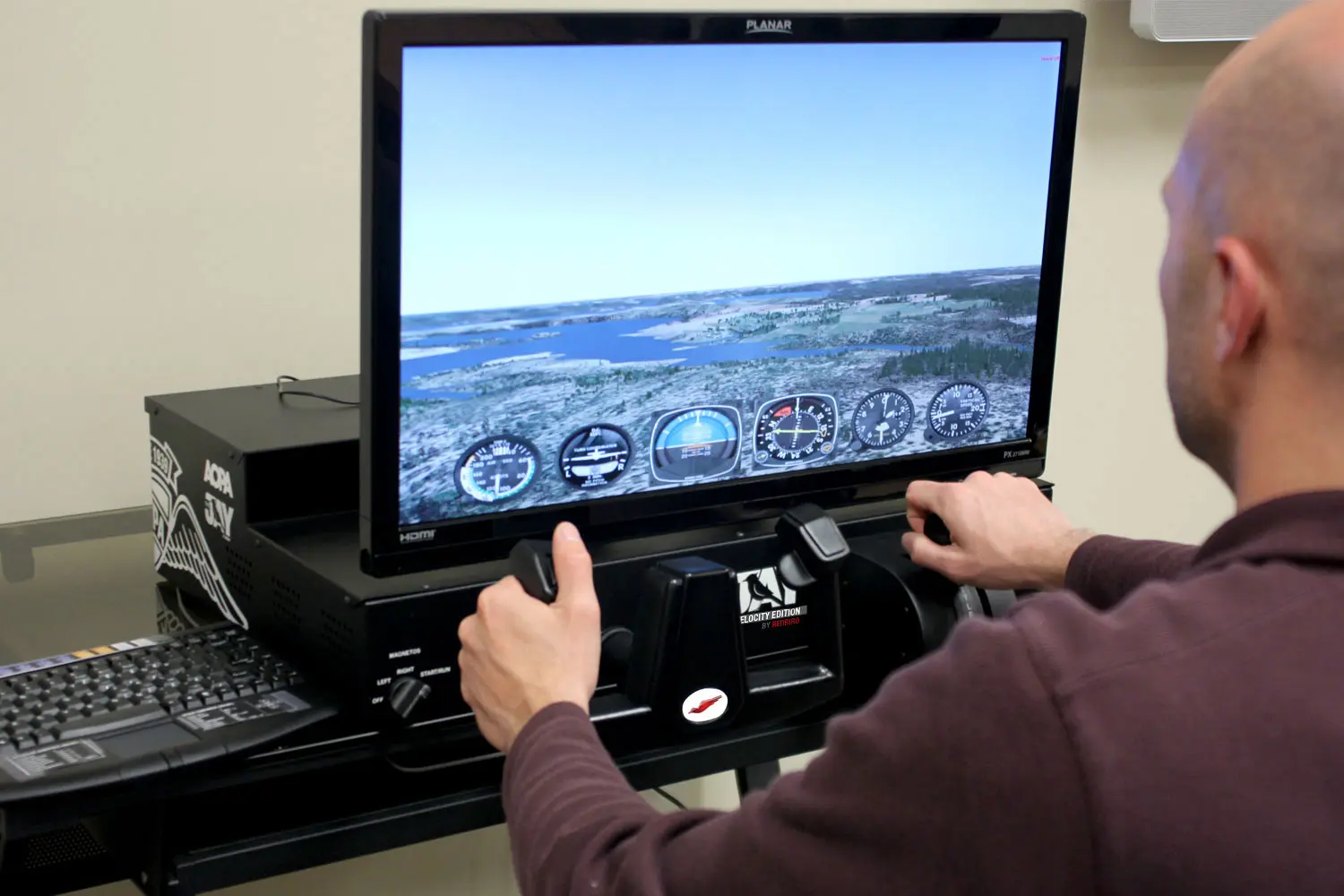
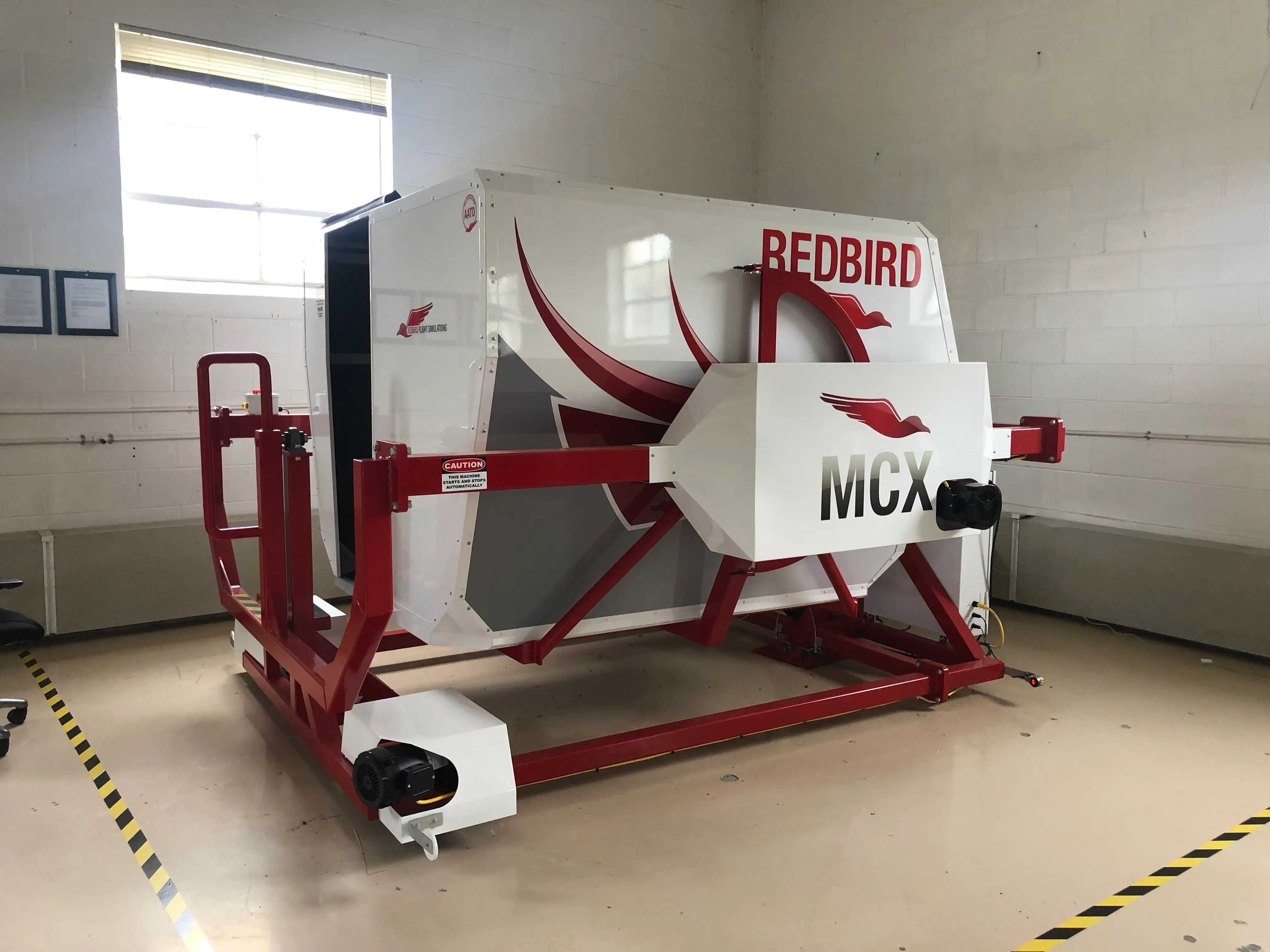
Our simulator facility at Motlow State College in Shelbyville includes a Redbird MCX advanced aviation training device, a Redbird TD2 basic aviation training device and a Redbird J desktop trainer. Device access is free for our students; instructor fees apply to supervised sessions. You can review the equipment through our simulator training options.
Free access does not make every session free instruction. When you plan supervised practice, account for the instructor’s time and how the session fits your course. Independent rehearsal and an instructor-led lesson serve different purposes, especially when you want training credit toward a rating.
Compare the marginal cost of your next step. If another aircraft lesson would be an additional expense, preparing in the simulator first may reduce repeated work. Within our Professional Pilot Program, focus on reaching the next milestone prepared; simulator use does not automatically trigger a package discount. If you are budgeting for the whole course, review financing options alongside the training scope.

Know which practice can earn instrument credit
Learning value and FAA credit are separate questions. For an Instrument Rating under Part 61, 14 CFR 61.65(i) allows the following instrument-time credit when the device, training and tasks are FAA-approved and an authorized instructor provides the training:
| Training device | Potential Part 61 instrument-time credit |
|---|---|
| Basic aviation training device (BATD), such as an appropriately approved TD2 | Up to 10 hours |
| Advanced aviation training device (AATD), such as an appropriately approved MCX | Up to 20 hours |
| Nonapproved desktop trainer, such as a Redbird J | Practice value; no FAA training credit |
The BATD and AATD allowances do not add up to 30 hours. Section 61.65(j) limits their combined use. Your instructor must match the session to the device’s approval and document eligible training. These allowances concern instrument time; they do not replace required aircraft cross-country flights or turn device practice into airplane flight time.
Pair one simulator objective with one aircraft lesson
Consider an illustrative instrument-training session: you know the approach chart, but setting up the navigation equipment consumes too much attention. A useful plan might look like this:
- Brief on the ground. Explain the intended route, navigation indications and approach sequence to your instructor.
- Rehearse in the simulator. Pause where the setup becomes confusing and work through the reason.
- Repeat with fewer prompts. Your instructor changes an element so you have to understand the task instead of reciting it.
- Apply it in the airplane. Use the next lesson to assess how the skill transfers into flight.
Equipment differences deserve attention. Our simulator configurations include G1000 or GNS 530 avionics, while our RV-12 training aircraft use Garmin G3X displays. The concepts can carry across, but button sequences and cockpit layouts need aircraft-specific preparation. Pair simulator practice with the aircraft you will actually fly.

Five questions about simulator value
Will simulator practice lower my package price? It does not automatically change the agreed price. In a program-based course, its value can be better preparation and less relearning within the training plan.
Can I log every hour I spend practicing? Credit depends on the device approval, the requirement and how the training is conducted and recorded. Review your intended use with an instructor before planning instrument training credit.
Can I use a desktop simulator at home? It can support assigned rehearsal, but your home setup does not automatically earn FAA credit. Our simulator options distinguish practice devices from approved training devices.
Is a weather cancellation a useful time for simulator work? It can be, if access and instruction are available and the session has a clear objective. Coordinate it within your training plan so the replacement lesson advances something specific.
How many airplane hours will I save? There is no reliable universal number. Your starting proficiency, preparation and course structure determine the result. Work toward the next training milestone rather than a promised savings total.
Give your next flight a clearer purpose
Bring the task that keeps slowing you down. Contact our team to plan simulator practice around your next aircraft lesson, and leave with a clear objective for both sessions.

.CUl5Z40-_Z21BriN.webp)